Why Metering Is Now a Finance Opportunity




Most CFOs at AI companies are sitting on a strategic asset they don’t fully control yet: the data that connects what their product does to what their business earns.
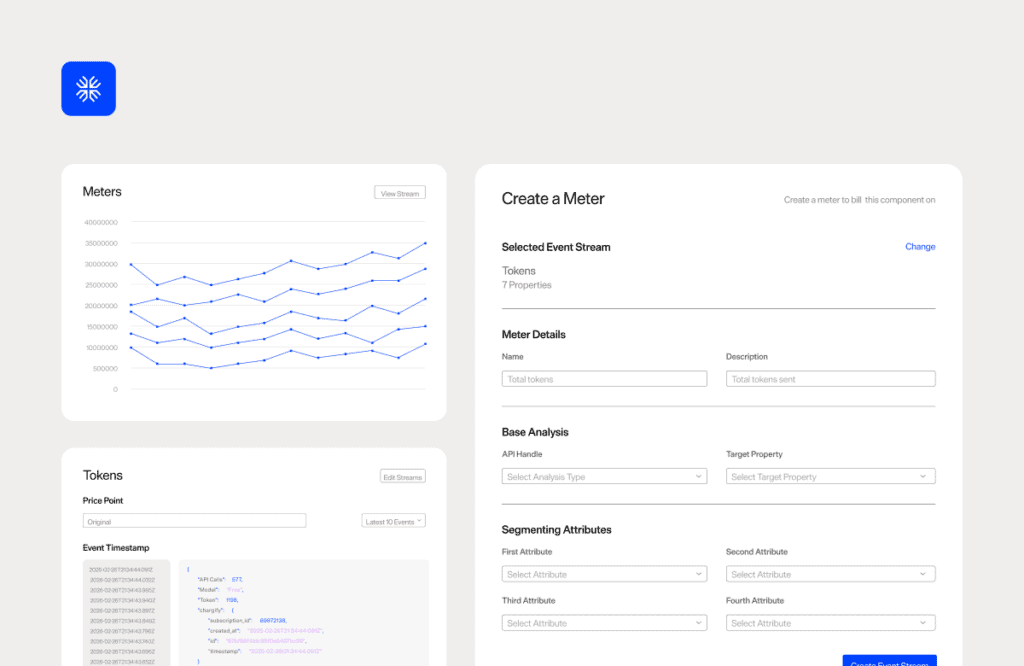
Metering, the infrastructure that tracks how AI systems are used, has traditionally lived in engineering. That made sense when usage data was an operational concern. It makes less sense now that usage data is the revenue model. The finance teams figuring this out early are gaining something real: the ability to see the business clearly and move faster than competitors who are still reconciling spreadsheets at month end.
Why the Revenue Model Changed
Traditional SaaS pricing was built around access. A seat, a subscription, a flat monthly fee. That worked because value delivery was simple: a user logs in and does something with the software.
AI products don’t follow that pattern. They perform work continuously on behalf of users, processing data, generating content, executing workflows, and making decisions automatically. A single customer account might run thousands of automated tasks overnight without a single login recorded.
When value is generated that way, seat counts stop functioning as a meaningful pricing unit. The natural signals are tokens processed, model inference requests, agent executions, and workflow runs. These units reflect value delivered and map directly to cost to serve. That shift isn’t just a product decision. It restructures the entire revenue model, and finance needs to be part of building what comes next.
What Finance Actually Gets From Owning the Metering Layer
When finance teams get involved in metering architecture before the systems are locked in, they help define what gets measured, how usage data flows into billing, and how consumption signals connect to the revenue metrics the business tracks. That early seat at the table produces advantages that compound.
A real-time view of the business. When usage events flow into billing as they occur rather than in end-of-period batches, finance sees consumption trends as they develop. Forecasts are grounded in current data. Billing surprises largely disappear. The close gets cleaner.
The ability to iterate on pricing. When billing logic is built to accommodate change, finance can model the revenue impact of a proposed pricing adjustment before it goes live, without needing engineering to build a parallel test environment. Pricing experiments stop requiring multi-team projects. The business can actually respond to what the market is telling it.
Strategic visibility into customer value. Reliable metering data tells you which customers generate the most value, where current pricing leaves revenue on the table, and which usage patterns predict expansion or signal churn risk. For AI products specifically, it reveals which models, agents, and workflows are driving real outcomes. That intelligence belongs in product roadmap conversations and pricing strategy, not just on the invoice.
An operational platform instead of a patchwork. When billing logic, usage data, revenue recognition, and financial reporting operate within a single connected system, manual reconciliation largely disappears. Finance becomes a genuine operational partner to product and go-to-market teams, working from current data rather than catching up to decisions already made.
The Cost of Waiting
The risk of not engaging early is real and worth naming plainly.
Revenue recognition grows more complex when revenue fluctuates with usage. Finance teams have to keep billing, recognition, and reporting accurate as customer activity shifts, reconciling high volumes of usage events against systems that weren’t designed to handle them. Static reporting cycles built for fixed subscription schedules don’t reflect what’s happening when consumption drives revenue in near real time. Forecasting gets harder when the underlying data lives across product analytics, engineering event logs, and disconnected billing systems.
And pricing changes become expensive. Every adjustment to tiers, value metrics, or commitment structures has to propagate across systems that weren’t built to work together. Over time, many companies stop iterating on pricing entirely because executing changes costs too much.
The finance teams building durable AI businesses aren’t waiting to be handed a billing system. They’re getting into the infrastructure early and making it an advantage. That’s the opportunity.
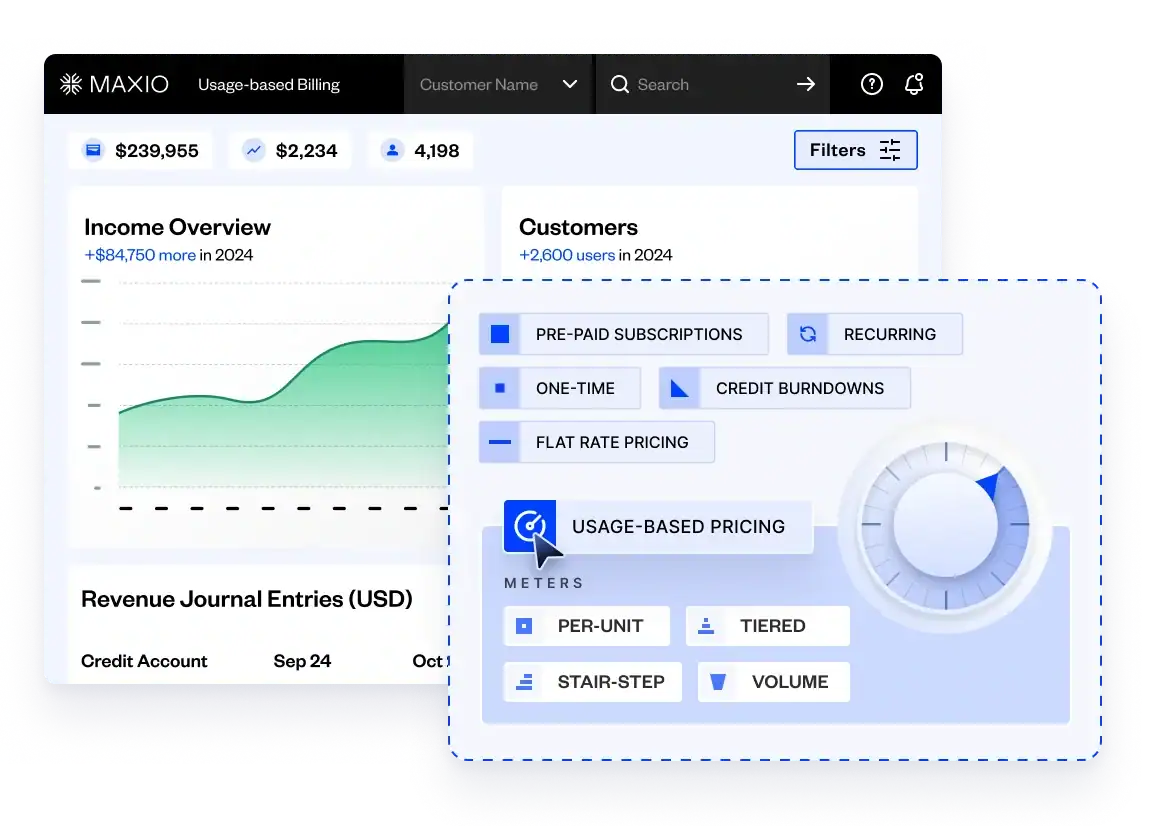
See how Maxio connects usage metering, billing, and financial reporting in one platform.