
On-Demand Webinar
Stop Implementing AI Backwards: A CFO’s Framework for Getting It Right
The promise of AI is real, but are you implementing it the right way?
In this on-demand webinar, Ben Murray, founder of The SaaS CFO, provides a masterclass on how top finance teams are building the right foundation for AI and applying it in real workflows.
Meet the host

Ben Murray
Founder, The SaaS CFO
As one of the top thought leaders in software finance with decades of experience, Ben offers unique insights for SaaS & AI businesses. Ben is a fractional SaaS CFO, coach, and finance course creator.
During This Webinar, You’ll Learn:

A clear framework for implementing AI in finance (and why most teams get it wrong)
How to build the foundation that gets the most out of LLMs
Practical ways to use AI in real finance workflows today
How to think about the economics of AI in your business
Transcript
Ben Murray: All right, I think we’re live, guys. Well, thanks for joining today. We’ll give everyone a second to join. Welcome. This is kind of a, a Maxio webinar takeover because you’re get- just getting me today. We’ll give everyone a second to join here. But just to make sure tech check-wise, if you can throw in the chat that you can hear me okay, see me okay, and then also would love to know where you’re dialing in from. So just make sure everything is working here. So thanks, guys. Thanks for joining here on Wednesday. Well, yep, perfect loud and clear. All right, just wanna make sure. So thanks, guys. It looks like people are joining. We’ve got some good content to cover today, plus a little MCP demo. Hey, Joseph. Yep. Yeah, Lana, I’m in Sc- oh, hey, Russell, I’m in Scottsdale as well. Hey, Rusty in Houston. How you doing? Jonathan, New Jersey. Well, thanks, guys, for joining. We’ll get going in a second. Yep, dialing in from Michigan. Hey, Susan. Courtney. Yep. Yeah, thanks guys for joining. So lot of content, AI and finance, we know there’s a lot of hype going around today, and wanna make this, have some content to present, plus a little demo. Hey, Marie. And you know, so wanna make this also a little bit informal, so throw questions in chat, comments in chat, would love to hear from you. Plus, I’ve got real-world examples of how tech CFOs are actually using AI, you know, not just theory, not just what LinkedIn is saying. So thanks guys for joining today.
So I’ll kick this off, and I’m kinda looking at two screens, so you maybe see me looking off to the side here. But thanks for joining, guys. My name’s Ben Murray, founder of The SaaS CFO. There’s my email there on the screen if you need to contact me or have any questions after. But today, talking about implementing AI backwards or stop doing that. How should we implement AI in my practices, and then also what I’ve learned from talking to a lot of tech CFOs. So thanks for joining today.
So guys, most finance teams start with the wrong question, right? We start with these prompts, and we see this on LinkedIn all the time. Like, “Hey, look at this prompt,” or, “Look at this workflow, and it’s magic. It’s gonna do all our FP&A work. It’s gonna close our books. Everything’s great.” But really, it’s a lot harder than that. And really, the right order is what finance workflow are we making repeatable? What’s that workflow? What’s the data? What’s the formula? What’s that deterministic output that we want? And then putting that AI layer on top. And I don’t know about you guys, but who had to Google what is deterministic versus probabilistic when all this stuff started to come out? I did, you know, as I was building out some AI tools. So we can’t start backwards just with the prompt without doing a bunch of homework prior to that, and I’ll talk about the layers and how I approach this. And then, of course, at the end, a little MCP demo of just what structured data can do for us.
And guys, I just saw this this morning on LinkedIn, and I know, and tell me in the chat, we see all this stuff on LinkedIn about how we have all these magical prompts, but this… this caught my eye because, you know, cloud financial plugin thinks FP&A is this, right? Dashboard, forecast, KPI, life is great. But in reality, right, we’ve got data from four ERPs. We’ve got ETLs. We’ve got mapping. All this stuff that we have to deal with in finance and accounting, and this is our reality, right? This is why that magic prompt is not going to create a repeatable workflow. So I love this because this is a little bit more realistic of what we’re facing today in the back office in finance and accounting, versus all those utopia posts that we see that’s gonna solve everything.
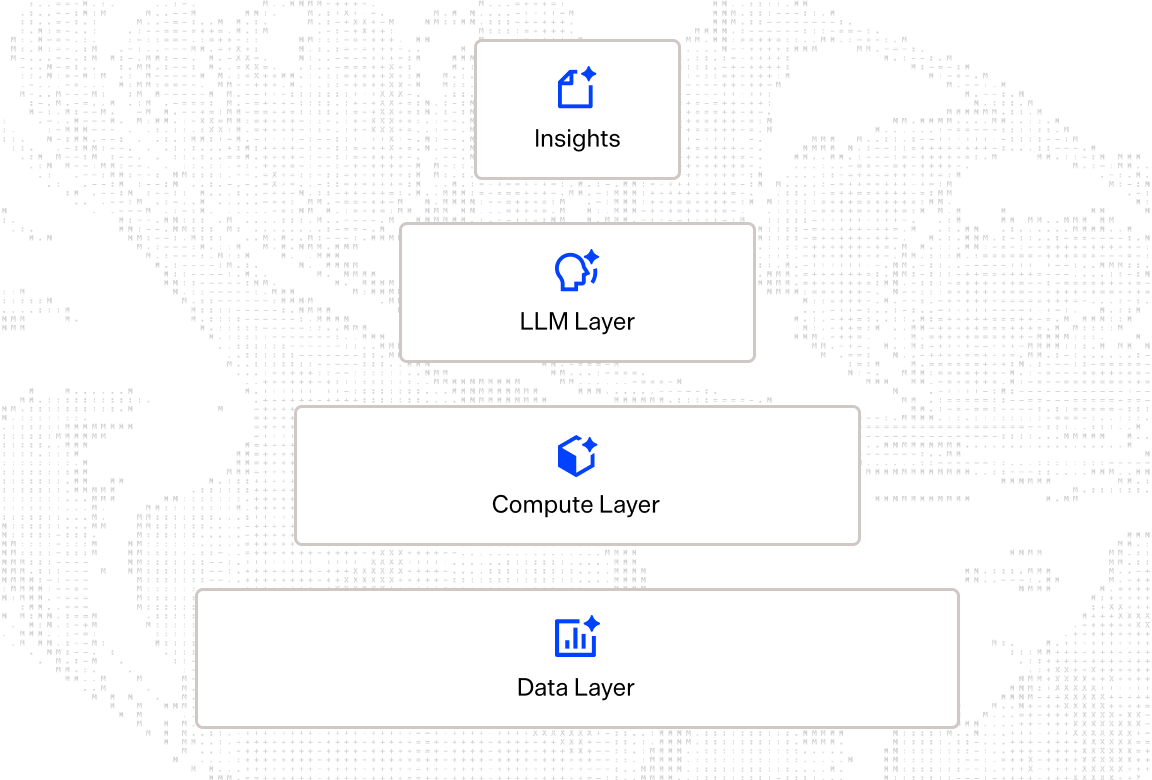
So our implementation stack here and starting at layer zero, and this is what I’ve learned from using AI in finance, building some AI tools to calculate SaaS metrics. One that we forget about with these prompts, hey, Rosie and Avon, layer zero, homework and system design. What questions are we trying to ask? What’s the workflow? What source systems are we hooking up to? What’s that target output? Then the data structure, right? So the system design, and when I created my metrics app, I had 40 pages of documentation that fed that, so it could produce repeatable results. And we’ll see a real-life example later in here from a CFO tech meetup of just how much work goes into this.
Two is the data structure. What data are we connecting? What’s the structure? And I highlighted this, it’s bolded a little bit, but what is well-labeled data? We have to have well-labeled data. That’s so important. We think about formulas, the metrics we’re trying to calculate, but what is ARR, right? Is that coming from a revenue number? Is that coming from my MRR waterfall? Is that coming from bookings data? So when you prompt AI and say, “Tell me my current ARR,” and I’ve struggled with this too, well, it pulled it from this MRR schedule over here, but I wanted it to pull from revenue. You know, so well-labeled data and definitions are so important.
And then we get into layer two, formulas and deterministic output. Those define metrics, they define formulas, the schedules, the recons, and this is where I had 40 pages of documentation in layers zero, one, and two to build a repeatable workflow that can calculate metrics and explain those metrics. And then overlaying AI on top of this stack so we can get repeatable workflows, repeatable data, repeatable metrics, because every CFO is wondering, “Can I trust this output?” And if we’re producing a report with 50 different data points, it’s gonna take us longer to validate those than it probably would to actually create that report manually. So your strategy fails before that first prompt. That’s why LinkedIn’s so dangerous right now.
So what question are we trying to answer? What decision will this support? If we’re trying to calculate net revenue retention, where is the source system? Is it coming from invoicing data? Is it coming from a revenue management system? What are the formulas? Are we calculating that on a monthly, a T3M, T6M basis? And what output should finance trust, and what output do we want, and who owns that final number? So it’s doing our homework before we start prompting. And again, guys, any questions, comments, throw it in the chat. You know, this is very informal today. I’d love to hear your feedback.
And this probably looks very familiar. You know, layer one is not the math, layer one is the structure. And I see this all the time, even without AI, is I go into a SaaS company and we start pulling customer data and we’ve got customer 12, we’ve got Acme, we’ve got customer, you know, cust/12 Acme, Inc., Acme, ARR, Rev, right? We don’t have a unified data structure and unified data definitions. So we can get to this unified structure so that AI can interpret this data on a repeatable basis. And also, the next layer is segmenting this data. I’m working a lot with founders. All right, we’ve got our customer base. We’ve got 5,000 customers, 500 customers. How do we assign metadata to this so we can slice and dice that? And that’s where AI is really good, is taking all these different data points and doing that analysis once we have those computed data points. So layer one’s not the math. Layer one is that structure that we’re trying to define.
And the four key SaaS data sources. So if you’ve been through my SaaS Metrics Foundation training in my academy, I talk about the four key SaaS finance data sources that we need in our software company. And regardless of AI, this is what it takes for me to produce a clean FP&A process each month. With these data sources, clean data structures, clean data, I can produce a nice FP&A process. I can have forecasts, I can have metrics, I have benchmarks, I have every data point that I need for a nice FP&A cycle.
So of course, financial data coming from our GL, our SaaS-ified chart of accounts, revenue streams, COGS, OpEx, department coding. Then our customer/revenue data that may be coming from Maxio, for example. So those MRR schedules, terms, segmentation, monthly versus annual pricing tiers. Then bookings data. If we have that outbound closed won motion, bookings data is so key because we need that to, one, feed our forecast, and two, to calculate go-to-market efficiency metrics. So if we don’t have bookings data, we’re not gonna have CAC, CAC payback, LTV to CAC, cost of ARR. And then finally, often overlooked, HR data. So our people data, our contractor data, headcount, those fully loaded costs, the contractor spend, what departments are they getting coded to? And right, this is the largest SaaS investment currently, maybe until agentic AI spend takes over.
So let me… I’m looking at two different screens here, guys, but I’m gonna take a look at the Q&A here real quick. But yeah, throw any comments, questions, love to hear your experiences. I gotta throw my readers on.
So how does this differ from how we’ve been setting up data analytics with Power BI or Data Lake other than replacing the human analyst in the top? Yeah. So right, great question. So this is no different. This and, and if you’re on my newsletter today that went out this morning, our homework here is no different than 20 years ago. I started out as an FP&A analyst in 2001, so dating myself a bit, but this, right, this is no different, and this is why we see all this stuff in social media, but it still comes back to this data foundation. So Susan, you’re absolutely right. We still need this data foundation that then we put that AI layer on top that’s gonna do more than we could ever do as a human FP&A analyst. In my newsletter today, I released a new blog post about how you can do more with your MRR schedule, and Excel can’t do that. Human analysts can’t do that. You know, so you’re right. You know, this is our homework. This has not changed, but it’s gonna make your life so much easier because as I move through my progression of data, calculate metrics, now AI comes on top, and we’re in good shape. So unfortunately, homework has not changed here.
So let me, all right, go over here. All right, so finance owns the math. So AI can help explain these outputs. It should not invent them. We don’t need, for example, AI to calculate CAC payback. The formulas are there. We know exactly how to create these schedules. That’s where we layer AI on top of this math layer or this deterministic output. So this is layer two.
Then finally, right, finance cannot have a black box, and that’s the big situation facing CFOs today is, right, what’s our official ARR number, for example? It’s defined in layer zero. And again, this is coming in practice. CFOs encode core definitions such as net versus GAAP revenue as reusable skills. So if you’re using Claude, using ChatGPT, whatever LLM you’re using, we’re defining these definitions of what revenue means, what ARR means, so that every time we prompt our dataset, it’s going to produce the same answer every time. So we define this in layer zero, calculate in layer two, and then AI can get the same number each time. And this is coming from practice, you know, of talking to CFOs and how they’re using AI in practice today, and I’ll show you some use cases for that.
Then layer three, right? This is, getting back to Susan’s question/comment. AI sits on top of this trusted data and math. So the output, the analysis, the review, the final deliverable, right? 20 years ago, we didn’t have this. We weren’t using deterministic language, right? We’re just calculating this stuff in Excel. But calculated, went to our review, then to the board, to ELT, whatever it might be. So once the data and math are trusted, now, right, we can do commentary, metric QA, forecast explanations to help us out in this process.
And then quality control. You know, one generic agent guessing produces slop. We have to define the role. So gatekeeper, and I’ve used this also, once it produces the data or the analysis, I have another agent come in and fact check it, and that does catch some errors. So think about that prompt. All right, create this board report. All right, but before we do that, we have another agent come in and fact check that. Fact check the data sources just to make sure it’s okay, and that catches a lot of AI errors. Then two editors trained on your voice and tone. I’ve got all my content loaded to text files, to Word docs, so it can write commentary in my tone and style. And then this is so important, core metrics encoded as skills. So think about Claude, Cowork, ChatGPT, Gemini, whatever you’re using, these are encoded. We have… And when I created my systems design and my specs, I have every single metric defined and the period of measurement was defined. So we have to have that. So think about your process, say in Claude, right? Claude is the hot LLM right now, and think about, all right, as you’re putting your data in there, you know, do you have a skill set? Do you have skills defined with your metrics definitions? The definitions of what ARR means, for example, the period of measurement. For example, CAC payback, it’s not just in month. Maybe I take a trailing three-month CAC payback, for example. You know, so all that is defined, and that’s where layer zero and layer one is so important.
So I’ve got this little gold star here, a real little ribbon. So this is based on actual CFO conversations, and if you’re a tech CFO, head of finance, please email me. I’ve got this private Slack community where we get together and help each other out. But this is from a couple calls where we talked about, you know, who cares about what social media is saying? How are we actually using AI in the back office? So here’s some use cases. So of course, CFO dashboards, we see this a lot. Month-end reporting, variance narratives, research briefs, forecast support, metric QA, ad and channel analysis, which is kind of interesting, and board memo drafts. So right, nothing shocking here, but taking what used to be manual and now trying to automate this a bit. You know, so you’re gonna see, right, LinkedIn saying, “Hey, I just automated the FP&A process in five minutes.” But really, we’re getting down to just the fundamentals of what we’re doing in the back office, and these are examples of what CFOs are actually doing today.
And then use case number one, the CFO dashboard. So one CFO designed his dashboard, you know, cash, P&L, budget, actuals, retention, headcount, fed it raw data. So handed AI the raw NetSuite exports, and I think maybe even did an MCP connection to NetSuite and asked it to propose a chart of account mapping itself. And then AI got that mapping roughly 95%, then his team did the rest of it. And this is really important. It was a half day to actually build this, but then there were four months of skill building before that.
So let me, let me pause here, because there might be… Oh yeah, my email is ben@thesaascfo.com if you guys wanna reach out or you wanna join the community. So this, let me find my mouse here. So this half day to build, four months of skill building before that. So a lot of groundwork. Layer zero is what makes layer three fast. So CFO use case right here. So this is not happening overnight. This was a pretty large SaaS company trying to automate some of their data processes.
So use case number two, trusted inputs in, board-ready draft out. So what finance provides AI, 12 months of variance explanations, calculated metrics. Also, right, brand, what colors, you know, our profile, what we want that output to look like. And then AI drafts a 10-slide month-end deck, executive summary, strengths, weaknesses, and charts. And of course, we QA that. So another use case where we’re providing trusted data and then AI does the heavy lifting on building out those decks and analysis.
And then use case number three, this is really interesting. From a stack of QBRs to the board’s hardest questions, and this is fascinating. So we, right, we have these department reviews, department QBRs, taking all that data, shoving it into AI or an LLM to create a board document, and then have AI review and provide insights. And then based on the state of the prompt, what would an investor or board member ask me? So that’s really interesting, not just one board deck, but all, say, the last four quarters of board decks, compiling that data that the board has seen and other financial data, and then having AI almost act like a board member say, “What are they gonna ask me?” So if you just finished up that latest monthly deck, that latest quarterly deck, feeding it in to be more prepared, right? You know, that’s our biggest fear is we want to be able to answer a lot of those questions. Of course, we can’t answer them all, but we wanna be prepared as possible to look competent in front of this board. So this is really interesting, right? Thousands of pages of QBRs, putting it in there, and then having it act almost like a board member so you’re prepared for that board. So I think that’s pretty fascinating.
So risk register. What are CFOs actually worried about? So in these tech meetups, we talked, we showed some use cases, how we’re using it, but then a lot of questions. Well, of course, this is the big one. Can we trust the output? Is it reading the draft instead of the final version? You know, who owns AI spend? You know, this is the whole gamut of AI that CFOs are thinking about. A big one, is company data secure? Are token costs controlled? Are we cutting labor or are we just adding software? And I think that’s where budget season, guys, is gonna be really interesting this fall when we start compiling all that token spend and everybody wants token spend for FY ’27. Your budget, your board deck is going to look a lot different than it did last year, and we’ve got to get prepared. And of course on my blog I’ve produced a ton of content on this. I’ve got a course, all this stuff, so that we’re prepared for next budget season because that board deck you used last year is not gonna cut it for next year. But these are what, in our tech meetup calls, what CFOs are worried about right now.
And then governance. Decide who owns the AI budget before it owns you, right? Token spend increasing internally, so we can either, on these calls talk centralized, an AI enablement officer often under the CTO, sets model policy, monitors spend by user and model, onboarding and education. Because in large companies, they could be spending up to, you know, 100,000. I saw the headlines that Uber went through their whole budget in four months. Or we could have at the department level, so each function carries its own AI budget. The owner feels that cost and places the value. You know, so pushing it down, but we’ve got to figure out how are we doing this? Are we gonna have just a big token budget, or are we gonna do it at the department level and have each department leader justify it? You know, so we’re gonna have per user spend caps, model routing, stage rollout, spend dashboard. And in one example, a CFO was saying one of their analysts was working on some project and burned through $2,500 of token credits in a couple days or that week, right? It can go fast, so we’ve gotta get prepared for next budget season.
And again, not all AI spend is the same, and this is where we talk about, Robin asked, “What is token spend?” So, right, well, token spend, just if you’re using ChatGPT, you’re using the API keys, and every time you prompt ChatGPT, Claude, it’s using, you know, a count, kind of a work unit. And then there’s a cost per million tokens. So that’s that token spend. Think of it like usage-based pricing.
But here, this is where it’s important, right? Is this gonna be… Is this product inference, right? Do we have an AI product line that’s gonna be embedded in our product, sit in COGS, drives our margin? Again, board discussion next year, what’s our AI margins? Internal productivity, tools your team uses, it’s an OpEx. Or really, it’s the department that they sit in. And then labor substitution. This is gonna be a hard discussion this fall. You know, are we replacing or augmenting roles? What’s that digital labor mix? You know, how much is human versus digital? And then experimentation on the dev side. You know, so a lot of different uses of AI, and our chart of accounts is changing because of this. Our metrics are changing because of this as well. So again, guys, any comments, questions, throw them in chat. I’ll take them anytime. This is kind of a Maxio webinar takeover today. You’re getting me today.
So AI can make labor metrics look better for the wrong reason, right? We have always talked about revenue per FTE, and you see people posting, “Hey, million per FTE, five million per FTE,” right? But that was before AI. So total labor cost, 10 million. But now maybe we have agentic AI spend replacing labor on the org chart, so seven million. That’s gonna make our ARR per FTE higher, but we’ve got all this AI spend that is supposed to be doing the work of people. I think that’s gonna be a big discussion in those board presentations, those budget presentations this December. So we’ve got to track that. So I propose in your chart of accounts, if you have agentic AI spend, that has to be tracked in a different GL account, just like wages, because we’ve got to track that. The board, board members, investors, potential investors are going to want to know that.
And then John has a question: Does AWS or Cloud give you tokens used by license seat so they know which department should be charged? Yeah. And I was just on a call, a webinar yesterday, and someone answered for me and they’re like, “Yeah, you can track that.” I know, and especially if you issue API keys too, you can issue API keys. “Hey, marketing, you get this one. Sales…” I feel like I’m saying, “Oprah, you get a car, you get a car.” But you know, you could have API keys per department to track, and supposedly you can track by user and seat. But that’s where we’ve got to dig in. Are we using ChatGPT, Anthropic, Gemini and figure this out now to be able to dole out these tokens? But yes, AWS, there is supposedly, like what I’ve done in my research, is there is a lot of tagging and tracking that you can do within AWS. And that’s where we’ve got to really go talk to our CTO, our product leaders, because we’ve got to have a lot of interaction there because there’s a lot of data we’re gonna need if we’re using AI in our product line to be able to track that usage by feature, by product line, by user, and then also internally. Yeah. So a lot of research due there.
So keep the ROSE classic. I just watched “Ron Burgundy 2,” right? What does he say? Keep San Diego classy or something like that. But the ROSE, if you haven’t heard of the ROSE metric, it’s recurring revenue divided by employee and contractor spend. This is, to me, better than rev per FTE. It’s the ultimate org efficiency metric. So how much recurring revenue do I generate for every dollar of employee and contractor spend? So this is, if there’s one challenge today of many, is calculate this for your company. Really easy, recurring revenue over this, calculate it on a T3M, T6M basis, I’d say for at least three years. You can also forecast it. And what I see is if you’re running a buck 50 and above, usually you’re EBITDA positive. You have very stable financials, usually producing some nice cash flow.
Now, this is changing. So ROSE plus digital labor. So I’ve expanded the definition, so recurring revenue divided by employee and contractor and agentic AI spend. And when we hear boards and we see all these reports about, well, all these AI use cases, we’re not seeing ROI. You know, we’re implementing it, but it’s just not working. And this, at a macro level, will tell you if it’s working, because what is our goal in recurring revenue businesses is more recurring revenue and the minimal amount of labor to produce that recurring revenue. So if you do have material agentic AI spend, there’s no free ride there. So this will tell you if you are thinking that you can be more org efficient, this metric will tell you that. So at a macro level, right, we know software ROI can be very difficult to justify other than maybe outcome-based pricing. So I challenge you to implement this if you have to prove out ROI on all that agentic AI spend. So let me know any questions, comments. But ROSE, if you Google the ROSE metric, it should take you to my blog post on that, and you can download my template.
All right, let’s see how we’re doing here. Okay, so measure our… We’re almost done with these slides, then I’ll show you an MCP example from Maxio. But measure AI ROI like a CFO, not a fan, right? Support bot, and this was from one of our CFO conversations. We know the cost, the scope, the measurement impact, ROI, straightforward. Cost in, tickets out. But we have all these generic horizontal tools. This is where the ROSE metric can help. Everyone uses it for everything, spread across every function, every department. ROI is really hard there. So the answer, honest answer there, yeah, right, this is not solved. So, but budget season will be interesting, you know, when they have to maybe cut this tool to increase their inference spend, you know, that’s where the ROI impact will be at play.
So in this, this is also a conversation, you know, when a role opens up, can AI capacity cover it? So really now rejustifying open headcount against agentic AI use cases. You know? So right, we know when headcount requests come in, all right, you gotta justify this. But now that next conversation as well, can AI cover that position?
All right, so one last slide here, and then we’ll go into a little quick MCP demo. But again, CFO action plan, pick one finance workflow. It’s easy to try to do everything. Define your target output. Where’s that data coming from? What are the definitions, that deterministic math, the 40 pages of specs? You know, in that use case, they did four months of skill building and then took about a day to build out the Claude dashboard, and then add AI for commentary, QA, and acceleration, govern the budget, measure the economics. So, right, AI should explain the numbers. It can do so much more than we could as an FP&A analyst. But we have to make sure when that board presentation goes out in December, right, that everything is fact-checked. So let me know any questions, comments there. But let me switch out of the slides here. And I’m going to… Just give me a second. I’m going to share my screen again, and I’ll show you some examples of what MCP looks like. So let me grab this.
And I won’t be able to look at the Q&A, but I’ll try to go back and forth. But hopefully, and if you could let me know, are you seeing ChatGPT right now? So if you could let me know in the comments, I just wanna make sure that’s working. I’m gonna go back here briefly. Yeah, is that working, guys? Let’s make sure. Yep, we’re seeing it. Okay, perfect.
All right. So this, I’ve got MCP, Maxio’s MCP hooked up to, of course, Maxio here. So I’ve got logged in here, which you don’t have to be, but I just created this MCP connection in about 10 minutes or less. So super simple. In this case, I connected to ChatGPT because I knew I could navigate the admin interface easier than Claude. So I hooked up to MCP, which then gets access to all the data in my login here. So a couple use cases that we can run through here. So we’ve got the data, right? This is the whole deterministic thing, right? Maxio’s calculating the data. It has the MRR, produce, retention, produce, so how can we use this to accelerate our analysis?
So here I ran a sample prompt. So now it’s connected to our data. There are about 20 tools set up within Maxio that we can run, and this is a common use case. I’m director of finance or CFO preparing the executive KPI pack. Use this report and then run some analysis. So you can see it did some work here and said, “Hey, the report output is large. I’m gonna download to the CSV, download the data, and then here’s my executive KPI summary.” So April 2026 was a weak MRR month. MRR declined. Key anomalies. It produced a CSV-ready table that I can format, put into my board deck, and some takeaways. Now, one interesting thing, right? This is what we expect from AI, right? Producing data output, commentary that we can trust. We review it, throw it in that board memo, away we go.
Now, one thing, we talk about deterministic versus probabilistic. So I asked how much did you have to calculate in the summary above versus just summarizing? Now, it said it calculated a meaningful amount of data, but it said it had the AR balances, it had the MRR waterfall, and really what it was calculating was month-over-month dollar changes, perfect, percentages, the movement, using these inputs. So it’s using that calculated data versus trying to create the MRR waterfall. I don’t want AI to create my MRR waterfall. I want it to use the existing one and then run analysis on that. So I’m pretty happy with that. That really is just calculating the analysis versus the raw input, output. And I can only see my screen right now, but I’ll flip back once I’m done with this and take any questions. So yeah, throw any questions, comments in there.
And then customer success. So in this case, I’m VP of customer success. Review our top 20 strategic accounts, right? To help me prioritize what customers I need to look at. So it went through, ran the analysis, and then here it prioritized my QBR briefing, Maxio accounts only. So Apple, Bank of America, excuse me, who should I talk to, the QBR angle, next steps. So you can see my top 20 accounts and my action plan. If I was VP of customer success, who should I reach out to? So pretty nice using all that data sitting there, and now I’ve got an action plan saved for the month if I’m in charge of customer success.
Next use case. So we know about prompting and trying to figure out the right prompt. So in this case, I asked ChatGPT, I said, “All right…” What did I say here? “So write a prompt that will be useful for a CFO to summarize revenue performance for a board report. Use the appropriate tools within the Maxio MCP.” So I thought this was really interesting. It knew, right? All right, we’re gonna pull this report ID, we’re gonna pull reporter ID here, we’re gonna pull a churn analysis, we’re gonna pull revenue details, and then I wanna know these key metrics, and so on and so on. So it gave me this prompt, which is perfect. Paste it over here. It ran, probably ran about five to seven minutes and produced this lengthy analysis. So you can see here, reporting period, executive summary that we could copy and paste into an email, key metrics, performance narrative, which is always nice with revenue. Because it can be hard to have nice variance explanations when explaining revenue performance. So we’ve got the revenue performance drivers. Here are the largest lost ARR, expansion customers, and so on and so on. So you can see this nice trend analysis. So this was a lengthy analysis, CFO commentary down here, which is hard to create. So a nice summary. We could probably shorten this or take pieces, put into board decks, into that monthly email to the executive team.
And then finally, here I’ll show you. And really just… And if I go back here, you know, I pre-ran these just so they’d come out fast, but really, right, it’s just like we use Claude or ChatGPT today. You know, paste it in here. I’ve selected the Maxio MCP, right? And off it goes, to produce that, right? So it’s pulling that same thing, right? It just ran this. You can see that’s the exact same thing it told me before, and I’ve got the MCP there. So I just wanted to run through a few use cases again that we’re using this data structure, we’re using computed outputs, and now we can produce this nice summary that speeds up our FP&A process.
So I’m gonna stop sharing there so I can see questions, comments here. So let me stop sharing and get back to here.
Yeah. Guys, any questions, comments on this process? I’ve used AI a lot with vibe coding, building AI metrics tools in my own FP&A process. So I’d love to hear from you guys, you know, where you stand. Do you have any questions, any comments on where you are in your AI journey today or anything I can help out with? So I’m gonna check the chat here. So let me know guys. And also I’ve put a lot of AI content, I’ll just throw this in case you haven’t seen my blog, but a lot of AI content there. So hopefully this was helpful today. But guys, any questions, comments? You see this is kind of a journey right now. There are no magic pills, no overnight successes. It’s taking time to get there. But yeah, any questions, comments that I can help with today, guys?
And Joseph, hey, Joseph. Ben, this might be a tangent question. How much does your specific billing software affect your AI roadmap for accounting operations? Oh, that’s a good question. So billing software, AI roadmap. So yeah, I think there’s a lot of considerations there because if we think the four key data sources, and what do I need to run my accounting close? What do I need to run my FP&A process? So yeah, where is that data coming from? Is it producing the right data? How much is calculated? So yeah, that is, if we think about those four layers, layer zero, one, two, and three, that’s our homework to figure out, all right, where is this data residing? What is it producing? And then how do we overlay AI on top of that?
And one thing, you know, I was just at a conference last week and, thinking about APIs and MCPs, how much of it is agentic AI friendly? Like how much data can you access out of these systems is really important. If the API is limited, it’s not gonna be too agentic AI friendly. So again, we went through the MCP demo, 20 tools, accessing all that data that I need to run my FP&A shop, really important. So I think the big consideration is if you’re using MCPs, APIs as part of your AI roadmap, how much data can it access? Because some of these APIs are really limited, and you’re not gonna be able to do what you really need to do to put kind of agentic AI operations in there.
Scott, yeah, I’m guessing yes, you’ll be sharing the deck. Yeah, the replay for sure, and happy to share the deck. I’ll work with Will on sharing that deck for sure. So happy to share that.
John, yeah, QBR, quarterly business review, model context protocol. Yeah, just a bridge to AI models. Yes. That’s how I see it. It’s just, it’s structuring that data. It is kind of the official bridge into that data source, and also kind of training it on how to interpret the data correctly.
And [question from audience], as I think about charging for API calls from clients, MCP usage, I’ve been told it’s hard to tag by client. Do you recommend a vendor like CloudZero to provide the client API? Yeah. This is a big one, guys, is if we are charging, right, if we have AI product lines, they’re using tokens in our product, and depending on your business model, is it subscription? Is it hybrid platform plus usage? We do really need to track token usage by customer, and there are tools coming out like that. It could be CloudZero, Cloud Capital. I just saw another one out there. Because this is big. If we have subscription plans with AI, are our heavy users eating our margin? Are the low users subsidizing the heavy users? So that’s really important. So that’s where it’s like, yeah, we’ve got to work with our product team, our CTO, the developers, because we’ve got to get that figured out before it’s too late. Because your board, investors, due diligence, they’re gonna wanna know what are your AI gross margins by product line, by feature? And it can’t just, it’s really interesting, the old SaaS days, it’s like, “Here’s our subscription margin. We’re good. We don’t have to do that by customer.” I think that’s changed a bit with AI. We may now have compute-adjusted LTV to CAC, where our heavy users have this LTV only, our medium user, our low users. So now we’re gonna have to get a little bit more segmented with our SaaS metrics.
Let’s see here. Catch up here, Jim. Why not do a lot of this in code Python? Yeah, you know, I’m not a Python user, but I know you see it creating Python script behind the scenes. But yeah, I mean, it just depends. You know, when I was doing a lot of data analysis, I had this data guy who was trying to do stuff for me and just couldn’t do it. Asked ChatGPT, create it, it does it. So yeah, I think it depends. My big thing, Jim, there is, is it repeatable, right? What’s the security? All that stuff, right? To get that internally approved. So yeah, a lot of different ways to go through this, but that’s where I expect my vendors to create these MCPs, to create the APIs, and do that work for me, you know, versus me having to create a whole other application, you know, that maybe that vendor should be producing anyway.
And Jason said, “Security was on your list of CFO concerns. I’ve heard conservative guidance, keep confidential financial data out of these GenAI platforms. It’s challenging to get as much value with it without it. What are your thoughts on security?” Yeah, you know, I mean, that’s the big thing. In our tech CFO meetup, they’re a pretty large AI or SaaS company, and they dealt with data. And they had internal data controls, went through the whole process. They’re a Claude shop, so that’s where you do need to work internally depending on how big you are. But it’s the future, right? I mean, we can’t just keep saying security concerns. We have to figure this out, and a lot of big companies are figuring that out to get it internally approved or bringing models in-house. I think that’s called repatriation, you know, that you can bring a model in-house, run it on your own servers, to have that data control and data security.
Can you accelerate workflow automation by using Zapier? Yeah. Yeah, and that’s what you see on LinkedIn all the time. Look at this workflow automation. It moves from data point to data point, but it just seems like that gets tricky. But I mean, it’s possible, but I don’t know if that’s a long-term solution.
Jonathan: “Is anybody using AI features embedded into traditional EPM tools, Adaptive, Anaplan? How effective are they building new models?” Yeah. I know, right, we’re seeing a lot of AI infused in a lot of these EPM tools, FP&A tools, so, and of course, everyone posting how they’re creating three-statement models in Claude. But you know, that’s where I’d expect them to make our life easier in FP&A, but not too familiar with if it’s producing ROI yet.
Christopher: “Are you using your accounting system MCP server or one coming from Maxio?” So this is the Maxio official MCP. I don’t know if there’s a separate accounting one, but this is one that… Yeah, I was logged in here, and I went to, there was a, went to admin and settings. Oops, I’m logged out here. But then it showed me how to, the link I needed to use, so it had instructions in the admin setting under integrations to connect the MCP to either Claude, OpenAI. I don’t know if there’s another choice, but it gave you I saw at least a choice between Claude and OpenAI to connect the official Maxio MCP.
So do you have to dump data from your accounting system? Oh, accounting. I’m sorry. Yeah, again, depends on your workflow, right? If revenue data, invoicing data sits in Maxio, it can access that. But yeah, I would think you’d have to have a separate MCP to your accounting data or a separate workflow for accounting data to bring that together. And that’s where it’s really interesting, when I was at this Go-To-Market summit last week, is the closed loop of data. So if we think about the four key SaaS finance data sources, financial bookings, HR, customer/revenue data, and if we can close the loop around those four key data sources so that your AI can access all of those, right? That’s our utopia. I’ve built some metrics apps where it does bring that data in, but yeah, that’s where you have to think about your AI roadmap.
Shomo, “Ben, I see most from our customers they want to use AI data but it’s fragmented, so data quality is low. What’s your take on how to use AI in the scenario finance doesn’t own the deal desk?” Yeah. Yeah, pipeline data. I would, my first use case would be doing a data audit rather than trying to do analysis of pipeline data or CRM data. And one, right, we know the data structure that we need out of our CRM system for new versus expansion, the type of revenue, term length, pricing plans. So one, all right, we’ve got to identify the structure in our pipeline data, CRM data, and then potentially run an audit on that. But that’s the same thing I see over and over helping founders and finance teams, is they’re just not capturing the right data in their CRM system. So the first step is always that audit. Really, audit of those four key SaaS finance data sources. So great questions, guys.
Yeah, great questions. Yeah, and that’s that closed loop of data, right? If you have those four, it seems, maybe it seems too simple, counting financial, HR, CRM, customer/rev data. If you can create a closed loop data system, layer structured, computed, layer AI on top of that, right, that’s our utopia. So any questions? Yeah, great questions, guys.
I think we have a few minutes here, but I’ll put my email in here again in case anything else comes up. And Joseph says, “Yeah, our CRM is a hot mess.” Yeah. Who else can identify with that? Yeah, that is, I do see that where, yeah, it’s like, is that a TCV value? Is that an annual value? Really, I can’t use this data. So I put my email in there. If there are any questions, comments that come up after, I’m happy to share the slides, too. We’ll figure that out. Replay will go out. But yeah, guys, great questions. Thanks for joining today. Any other things we can address here before we wrap up?
All right, guys. Well, that sounds like that’s it. Well, stay tuned for future webinars. I usually hold these, you know, once a month or so, on my platform or via Maxio. Yeah, John says, “Always seems to be the case, our CRM is a hot mess.” Yeah. Yeah, unfortunately. No go-to-market efficiency metrics if your CRM is a hot mess, unfortunately. So yeah. All right, guys. Well, thanks, Scott, Jalen, Rosie, Rachel. Oh, the new, yeah, ROSE metric. Yeah. Yeah, that, you can implement that today and see. Tell me. Yeah, email me. Tell me if you beat the $1.50 test. That I think will be important for the board, especially with the agentic AI spend. So Jason, Utunde, Chris, Joseph, yeah, thanks guys, appreciate it. Thanks for joining. My email’s there, email me anytime. And I think, guys, with that…