From Automation to Intelligence: The CFO’s Next Frontier



For most of the last decade, finance transformation has been defined by automation.
Across industries, finance teams invested heavily in tools and processes designed to eliminate manual work and reduce operational drag. That focus was necessary. Many teams were operating with systems that simply couldn’t scale alongside growing revenue complexity, new pricing models, or expanding customer bases.
Automating billing. Automating revenue recognition. Automating the close. For many finance teams, that work was long overdue and incredibly valuable. Automation reduced manual effort, lowered error rates, and gave teams back time they desperately needed.
But automation alone isn’t the end state.
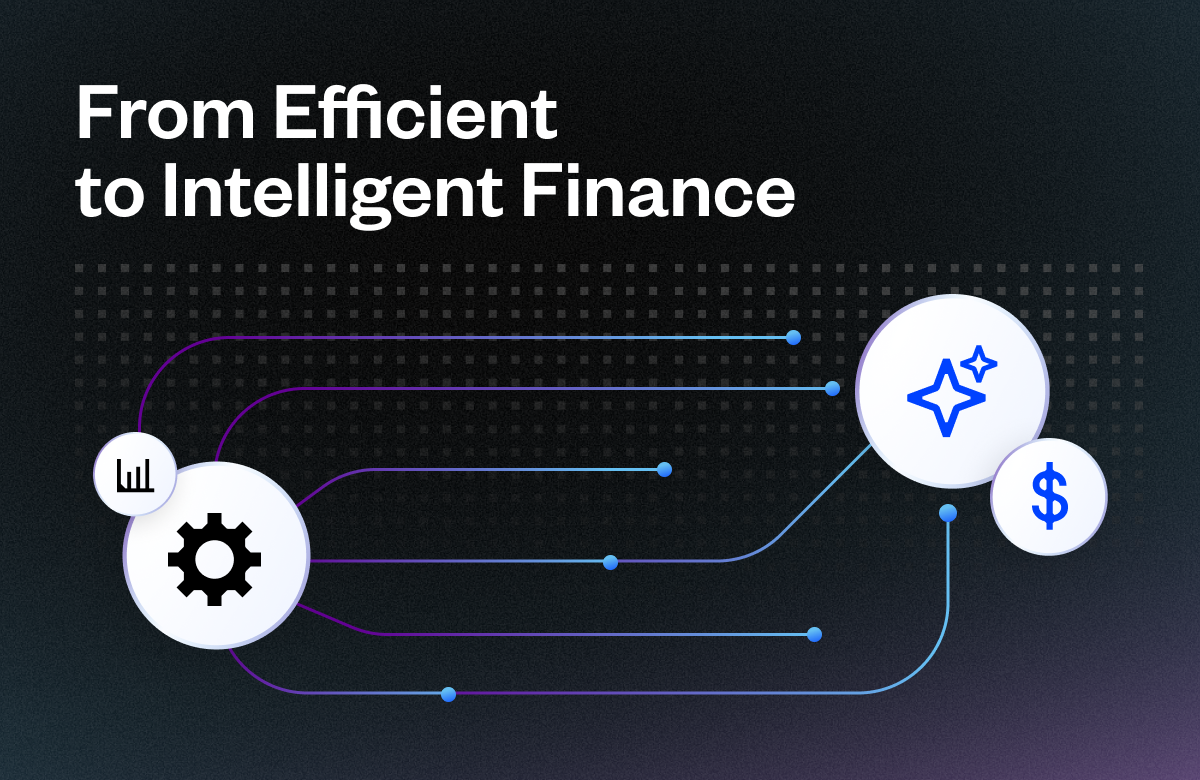
Efficiency was the first milestone. Intelligence is the next one.
As businesses move faster, pricing models evolve, and expectations from boards and investors increase, finance leaders are being asked to do more than run efficient processes. They’re being asked to deliver insight. And that’s where the next frontier begins.
The shift underway isn’t from manual to automated. It’s from automated to intelligent.
Automation Solved Yesterday’s Problems
There’s no question automation has changed finance for the better.
Automated workflows have helped teams:
- Close the books faster
- Reduce spreadsheet dependency
- Eliminate repetitive, error-prone tasks
- Scale operations without adding headcount
For many organizations, automation was the difference between keeping up and falling behind.
But automation is fundamentally backward-looking. It’s designed to execute known processes more efficiently, not to help leaders see what’s coming next. Automated systems can tell you what happened faster, but they don’t necessarily tell you what it means, or what to do about it.
That gap is becoming more visible as businesses grow more complex, faster-moving, and more experimental in how they monetize and operate.
Why Intelligence Matters Now
Today’s CFOs operate in a very different environment than even a few years ago.
Pricing and packaging change more frequently. Contracts are more complex. Usage-based and hybrid models are becoming common. Stakeholders expect real-time visibility into performance, not explanations weeks after the fact.
In this environment, efficiency alone isn’t enough.
Finance leaders need the ability to:
- Spot risks early, not after they hit the P&L
- Understand trends as they emerge, not after the quarter closes
- Model scenarios with confidence, not assumptions
- Guide decisions with signals, not lagging indicators
That’s what intelligence provides. And it can’t be bolted on as an afterthought.
Intelligence isn’t something you switch on once processes are automated. It emerges when systems, data, and workflows are designed to support decision-making and not just execution.
The Limitation of Automating Fragmentation
Many finance teams have automated workflows without addressing a deeper issue: fragmentation.
This is where the conversation often overlaps with AI, but the issue exists even before intelligence enters the picture.
Revenue data often lives across CRM systems, billing platforms, revenue schedules, and general ledgers that don’t fully agree with each other. Contract changes don’t always flow cleanly downstream. Reporting metrics vary depending on who pulls them and when.
Automation can speed up individual steps inside those systems. It doesn’t resolve the gaps between them, however.
When data remains fragmented:
- Forecasts depend on manual adjustments
- Variance analysis requires reconciliation before insight
- AI outputs raise as many questions as they answer
In other words, automation makes the machine run faster, but intelligence requires the machine to be connected.
Without connectivity, finance teams are left interpreting outputs instead of acting on insights. Speed increases, but clarity does not.
What Finance Intelligence Actually Looks Like
Finance intelligence isn’t about flashy dashboards or sophisticated models for their own sake. It’s about creating an operating environment where insight is a natural byproduct of how the business runs.
In an intelligent finance operation:
- Revenue events flow cleanly from quote to billing to recognition
- Changes propagate automatically instead of triggering downstream cleanup
- Metrics are consistent by definition, not by effort
- Forecasts update continuously as new signals arrive
This is where AI starts to matter not as a replacement for judgment, but as an amplifier of it.
The emphasis here isn’t on AI as a breakthrough, but on intelligence as a natural outcome of well-structured finance operations.
When the data foundation is solid, AI can help surface anomalies, highlight emerging trends, and maintain rolling forecasts that reflect reality instead of static snapshots.
The difference is subtle but important. Intelligence doesn’t just answer questions faster. It changes which questions finance leaders can ask in the first place. Finance moves from explaining what happened to helping shape what happens next.
From Scorekeeper to Navigator: How the CFO Role Evolves with Intelligence
As finance operations become more intelligent, the CFO role evolves as well.
CFOs are no longer measured only by how efficiently they close the books. In an intelligent finance organization, the CFO’s value increasingly shows up between reporting cycles, not just at the end of them. They’re measured by how confidently they guide the business through change. That means translating complexity into clarity and helping leaders make informed tradeoffs in real time.
This shift doesn’t diminish the importance of control or discipline. If anything, it raises the bar.
Intelligent finance requires:
- Clear definitions and ownership of metrics
- Governed, auditable data
- Systems that can adapt as the business evolves
The CFO becomes less of a historian and more of a navigator, still accountable for accuracy, but increasingly responsible for insight and forward motion.
That role requires both discipline and flexibility: discipline in data governance and controls, and flexibility in how finance supports evolving business models.
Intelligence Follows Structure
There’s a temptation right now to look for intelligence in tools alone to assume that adding AI on top of existing systems will unlock better decisions.
In practice, intelligence follows structure.
Finance teams that get the most value from AI and advanced analytics are the ones that have already invested in connecting their systems and cleaning up their data. They’ve reduced reconciliation, standardized definitions, and created a single source of truth across the revenue lifecycle.
Without that foundation, intelligence doesn’t scale. It creates noise instead of clarity.
The organizations that struggle most with advanced analytics and AI aren’t lacking ambition. They’re constrained by systems that were never designed to work together.
The Advantage of Getting This Right
When finance leaders move beyond automation and build toward intelligence, the impact extends far beyond the finance team.
The business gains:
- Faster, more confident decision-making
- Earlier visibility into risks and opportunities
- Stronger alignment between finance, sales, and operations
- Greater credibility with boards and investors
Most importantly, finance becomes a proactive partner in growth instead of a reactive function trying to keep up.
When intelligence is embedded into finance operations, leaders spend less time explaining numbers and more time shaping strategy.
Building Toward the Next Frontier
The move from automation to intelligence isn’t about replacing systems overnight or chasing the latest trend. It’s about sequencing transformation deliberately.
Start by connecting the core systems that power revenue. Reduce fragmentation. Establish clean, governed data flows. Then layer intelligence on top of a foundation you trust.
That’s how finance evolves from efficient execution to strategic advantage.
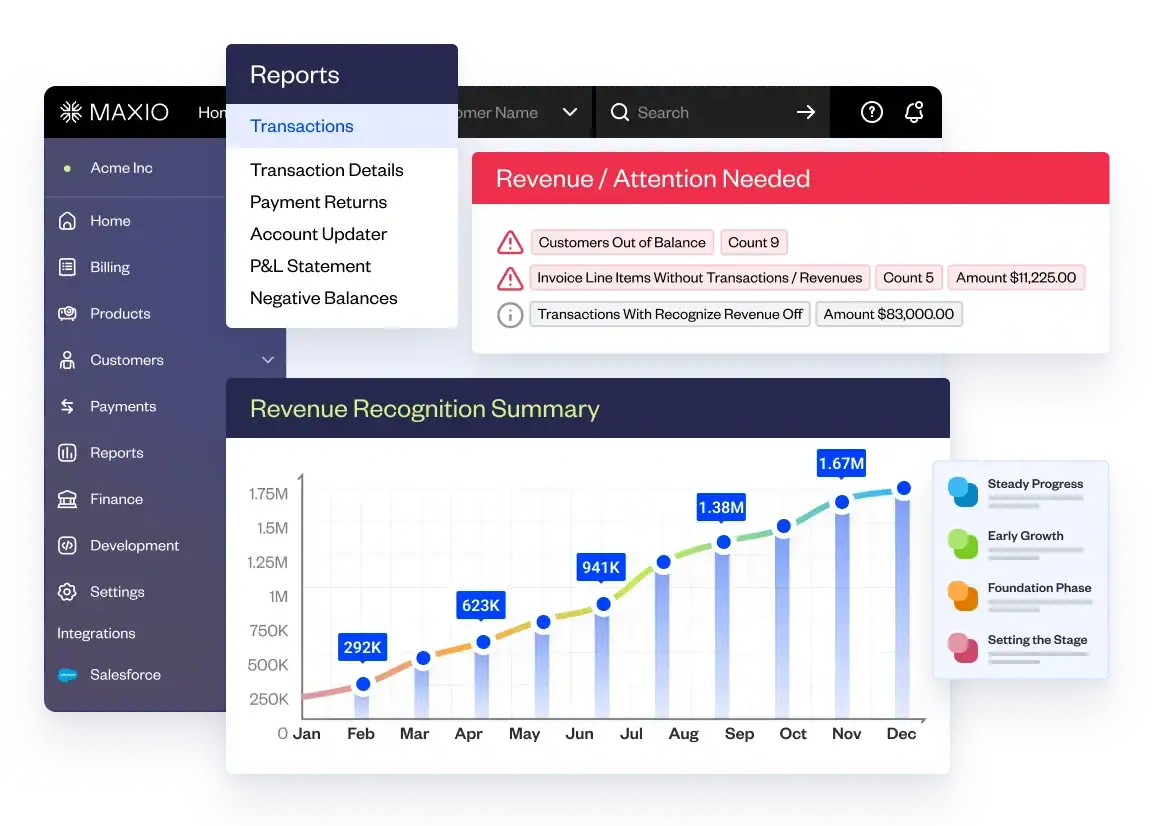
At Maxio, that’s the world we’re building toward: helping finance teams unify billing, revenue recognition, and reporting so intelligence becomes part of how finance operates every day.
When systems are connected and data is trustworthy, finance leaders gain the confidence to move faster, experiment responsibly, and guide the business through change without losing control.
If you’re thinking about what the next phase of finance transformation looks like for your organization, you can request a Maxio demo to see how a connected finance stack supports intelligent, confident finance leadership as your business scales.