


Key Takeaways
- Unbilled AR represents revenue that has been earned but not yet invoiced, making it a critical metric for aligning billing operations with revenue recognition rules.
- Because definitions and billing practices vary across SaaS companies, it’s essential to clearly document when and how unbilled AR is recognized, ensuring consistent reporting and accurate financial statements.
- Monitoring unbilled AR trends helps businesses identify operational bottlenecks and forecast cash flow, supporting healthier revenue operations and more predictable financial performance.
What is Unbilled AR?
Like deferred revenue, Unbilled AR (accrued revenue) is an essential element and concept of revenue recognition for subscription businesses.
Unbilled AR is an Asset account on the balance sheet that represents amounts recognized as revenue for which invoices have not yet been sent. This can occur when you invoice in arrears or have any delay in billing relative to the revenue recognition trigger date. It is also common with professional services fees paid in advance for work to be performed.
This is especially common in subscription businesses that perform professional services. For example, a customer may prepay for implementation, but the revenue is recognized as services are delivered, often creating temporary unbilled AR balances until all work is completed and billed.
How to Calculate Unbilled AR (with Formula and Examples)
Because SaaS companies may use different billing schedules, revenue recognition rules, or service delivery models, the calculation of unbilled AR can vary. The following formula represents one common approach.
Example Formula
This example formula shows how some SaaS companies think about Unbilled AR.
Unbilled AR = Revenue Earned to Date – Amount Invoiced to Date
The formula for Unbilled AR is straightforward: it is the difference between the revenue you have earned and the amount you have billed to your customers.
Example Calculation
A SaaS company delivers a professional services engagement valued at $12,000, recognized evenly over three months. By the end of the first month, the company has delivered $4,000 worth of services but has not yet issued an invoice.
Using the formula above, the unbilled AR is calculated as follows:
Unbilled AR = $4,000 (revenue earned) – $0 (invoiced to date) = $4,000.
This means the business has earned $4,000 in revenue for services already delivered, but no invoice has been sent yet. The $4,000 appears as an asset on the balance sheet until billing occurs. Tracking this amount helps ensure that financial statements accurately reflect earned revenue while highlighting potential delays in billing operations.
Why Unbilled AR Is Important for SaaS Businesses
Understanding unbilled AR is essential for maintaining visibility into revenue that has been earned but not yet billed, providing a clearer picture of operational efficiency and financial performance.
- It improves alignment between billing and revenue recognition.
Unbilled AR highlights when revenue has been recognized but not invoiced, helping teams identify whether billing processes are lagging behind service delivery. This alignment is essential for accurate reporting and healthy revenue operations. - It enhances cash flow forecasting.
Because unbilled AR represents revenue that will eventually be billed and collected, monitoring this metric helps finance teams anticipate incoming cash and identify delays that could impact liquidity. - It surfaces operational inefficiencies.
Consistently high or rising unbilled AR may signal slow billing cycles, service delays, or unclear ownership in the invoicing process. Identifying these trends allows companies to streamline workflows and improve billing accuracy.
By monitoring unbilled AR alongside other revenue recognition metrics, SaaS organizations can better manage financial expectations, reduce bottlenecks, and plan for sustainable, predictable growth.
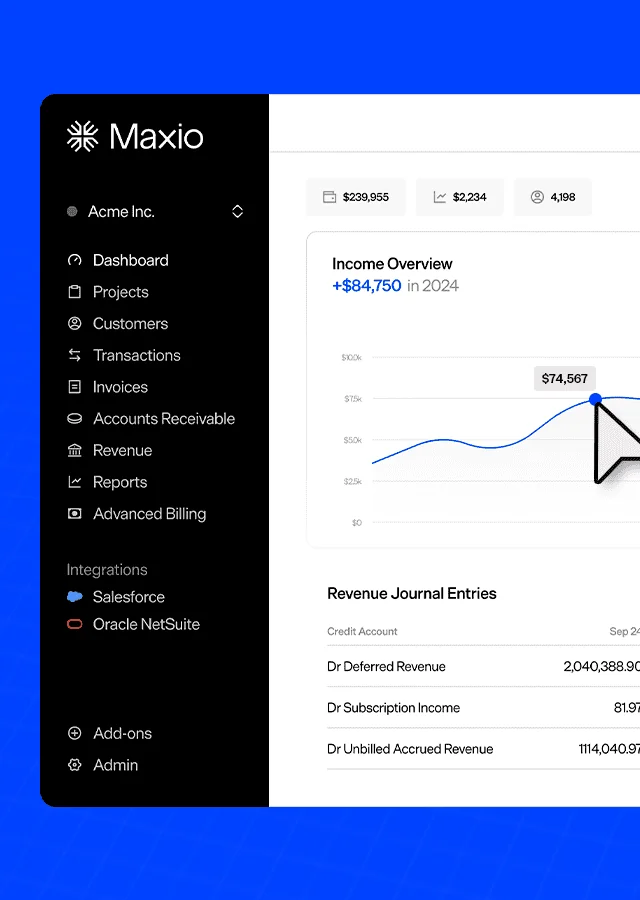
Maxio tracks unbilled AR as a distinct balance sheet item — surfacing earned-but-uninvoiced revenue in real time so finance teams can monitor the gap between service delivery and billing without a manual reconciliation.