

What Finance Needs to Know About Modern Monetization



The only way tech companies survive, let alone succeed, is by innovating. Constantly. And while there is no end to the hurdles between your organization and that innovation, you don’t want finance to be the bottleneck.
As an AI-native company, Maxio has seen this all firsthand. We know what happens when pricing moves faster than billing and what it takes for finance to keep up.
Let’s say, for example, your product folks ship a new pricing model—something usage-based and token-denominated with a prepaid wallet option—and BAM! You get blindsided. Does that sound familiar?
All of a sudden, the flow of cash and costs in your business fundamentally changes, and if you, in finance, aren’t looped in until the first invoices need to go out, you wind up with a mess on your hands. A chaotic close; manual, error-prone rev-rec; and massive blind spots in your forecasting.
Under the traditional financial model we’ve all been used to, a customer signs a contract, pays a monthly fee per user, and you know exactly how much revenue is coming in, when it’s coming in, and how it needs to be recognized. In the world of AI, it’s not so straightforward. A customer may buy a batch of tokens, for example, but revenue isn’t recognized until those tokens are used.
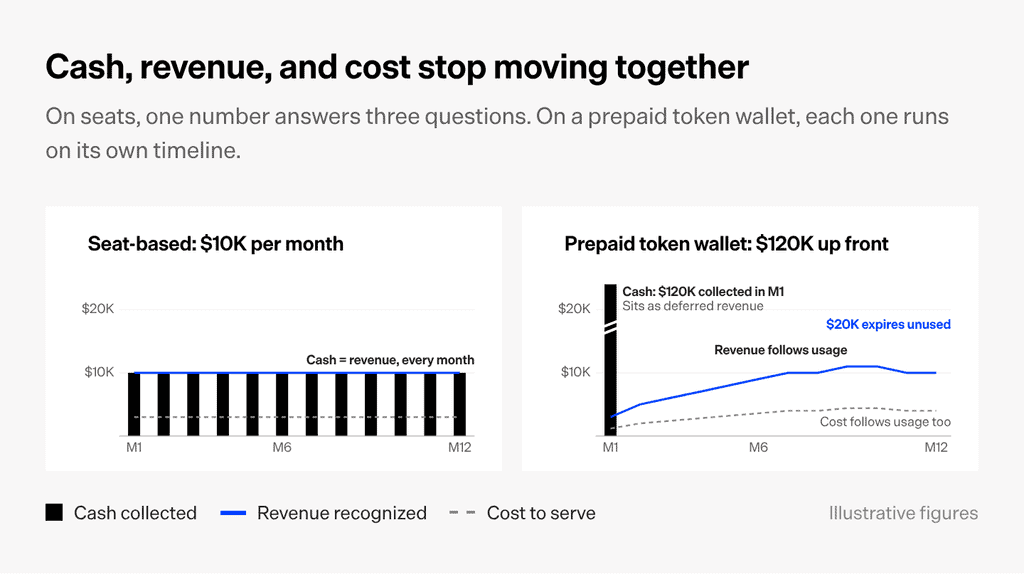
So you can’t just ask “Did we bill it and get paid?” No, you’re left wondering how it affects costs, when you can expect revenue, when you can recognize it, and how to plan for it all.
Is this a technology problem or a communication problem?
As you scramble to catch up with what your product team is doing, you might be thinking you’ve got the wrong finance systems (you might). Or that you may be missing an integration (you could be). But odds are, before you dig into your finance tech stack for answers, you should look at your cross-company communication for gaps. Because, in many businesses, product teams and finance teams don’t speak the same language. And, in some cases, the two groups aren’t talking at all.
Finance teams who close their books quickly are able to do so not simply because they have better tools or processes, but because they’ve created the billing structure in tandem with their product and engineering teams.
How did monetization get this complex?
The seat, the license, the thing you could count and assign value to has changed. Why? Businesses are playing with pricing to create differentiation, to increase adoption, to grow—and they’re using AI and usage-based products to make it happen.
Now, customers have access to prepaid, consumption-based, or committed-minimum options, or to hybrids that suit them best. This gives them the flexibility they demand, and that means finance teams have to learn how to manage three more moving parts:
- Entitlements: what the customer is allowed to do, and under what conditions
- Metering: how actual consumption gets tracked and tied to billing
- Wallets: how prepaid balances are held, drawn down, and recognized
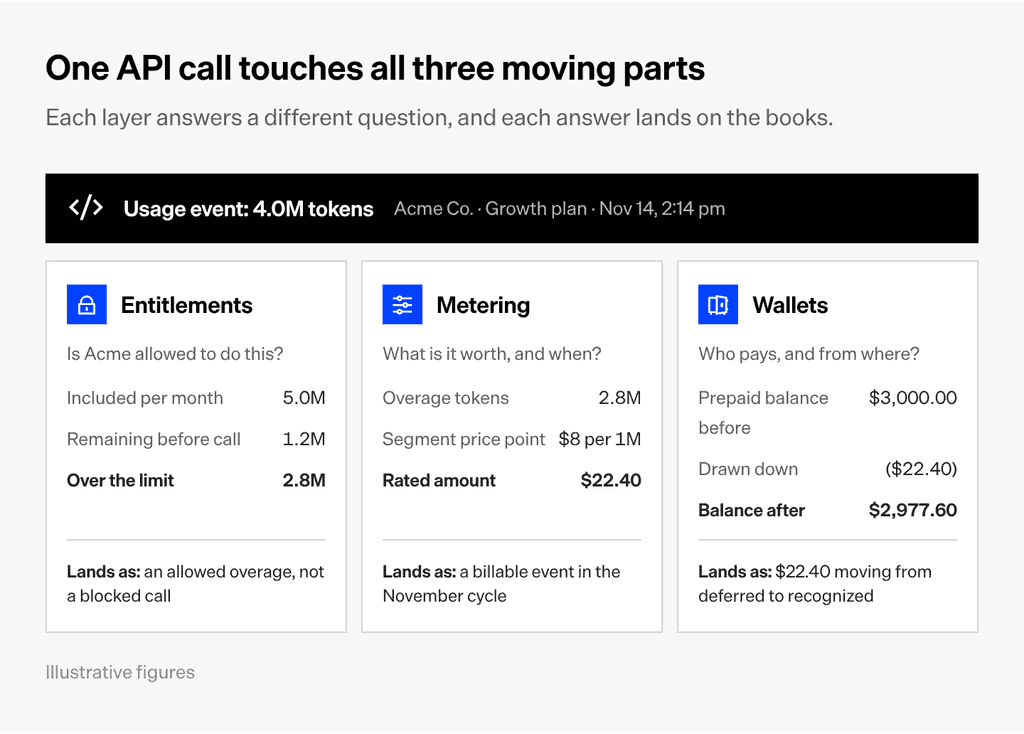
It’s also important to remember that the economics change when you’re using AI models. Gross margins, for example, are vastly different when your product costs more the more customers use it. And if that isn’t complex enough, consider that each of these elements is essentially a pricing decision before it’s ever a finance decision.
You need to be in the room when those decisions are made, or you’ll end up fighting the fallout later.
How should finance talk about billing with their product and engineering teams?
Each moving part mentioned above is a separate conversation with the engineer and product teams. But here’s a simple way to know what to say.
01 Entitlements
Entitlements are the bridge between what sales has said, or what a PLG motion has promised, and what the product actually delivers. When they’re not tracked meticulously, everything that’s sold, billed, and delivered—and what the customer can actually access—ends up being managed in different systems and reconciled by hand. So you get overbilling, underbilling, and customers disputing invoices. Worse, without a reliable entitlement approach, revenue can leak silently, and nobody catches it until the damage is done.
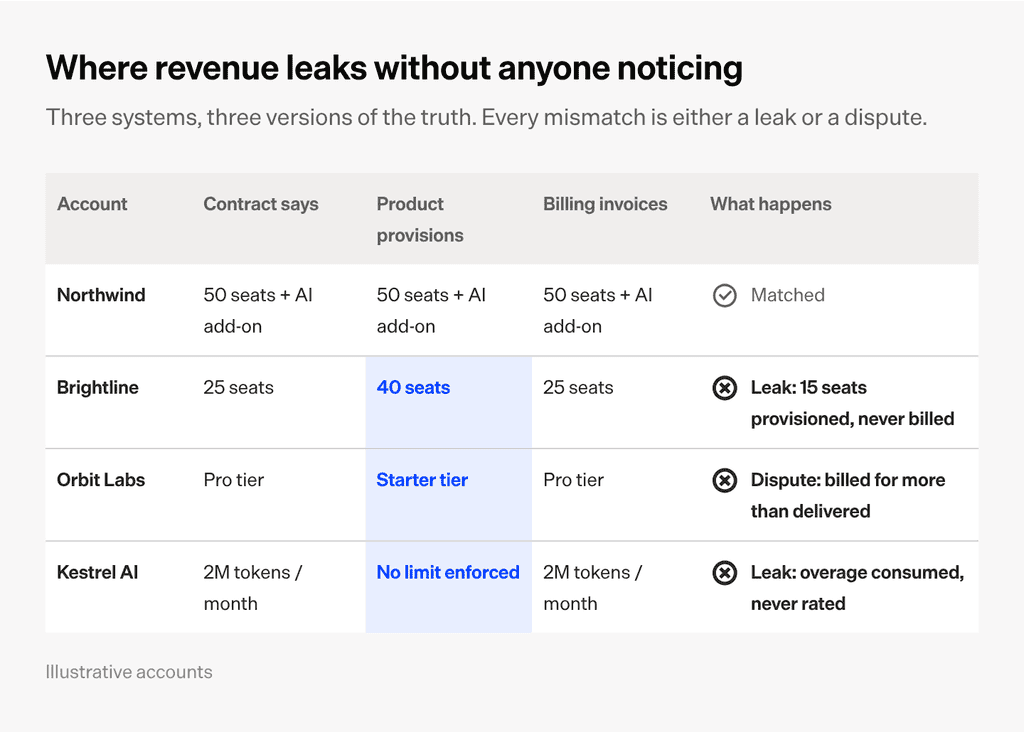
- Ask your engineering and product teams: Where do entitlements live, how are they allocated, and will billing be able to look into it all in real time?
02 Metering
Metering tracks consumption at the product layer and is billed after the fact. It gets complicated fast, in other words. A customer on an annual contract, for example, might accumulate usage for a full year while overages bill monthly—which means the contract term and the billing cycle are running on two different clocks. To keep things running smoothly, you’ll need custom price points at the segment level and control over what shows up on the invoice. It’s how you’ll keep usage and contract terms connected and accurate.
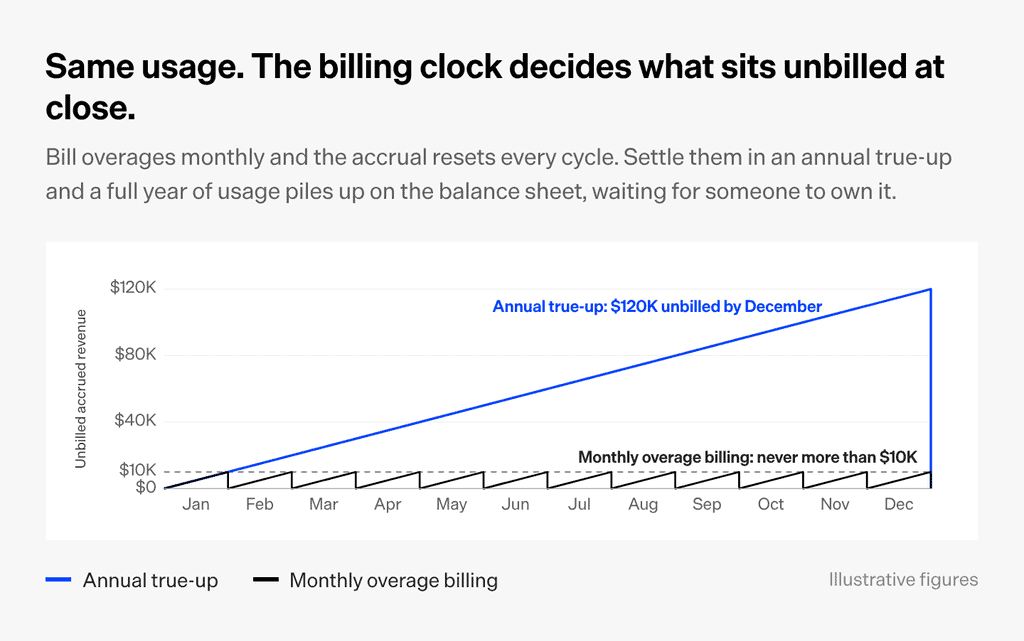
- The question to ask: When does a usage event become a billing event, and who owns accruals in the gap between them?
03 Wallets
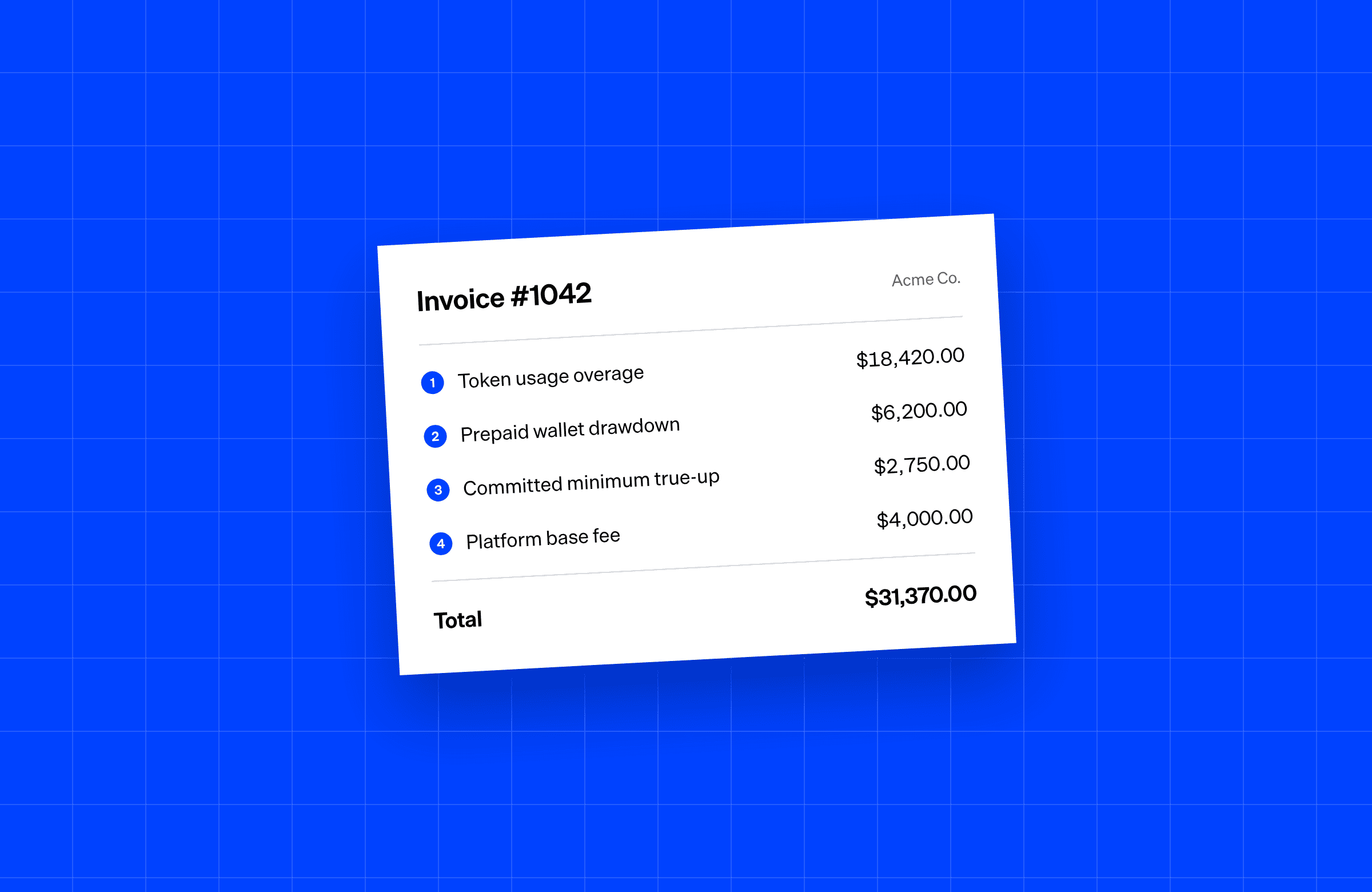
Wallets are a prepaid balance of credits, tokens, or funds that a customer draws down as they use a product. That flips the timing on everything. Customers pay up front, then spend that balance over weeks or months. So every account now has a live number to track—what’s been bought, what’s been used, what’s left, and when it expires. And when you multiply that across customers with different drawdown rates, tranches, and expiration terms, deferred revenue tracking breaks down pretty quickly, especially if it’s not built into your billing system.
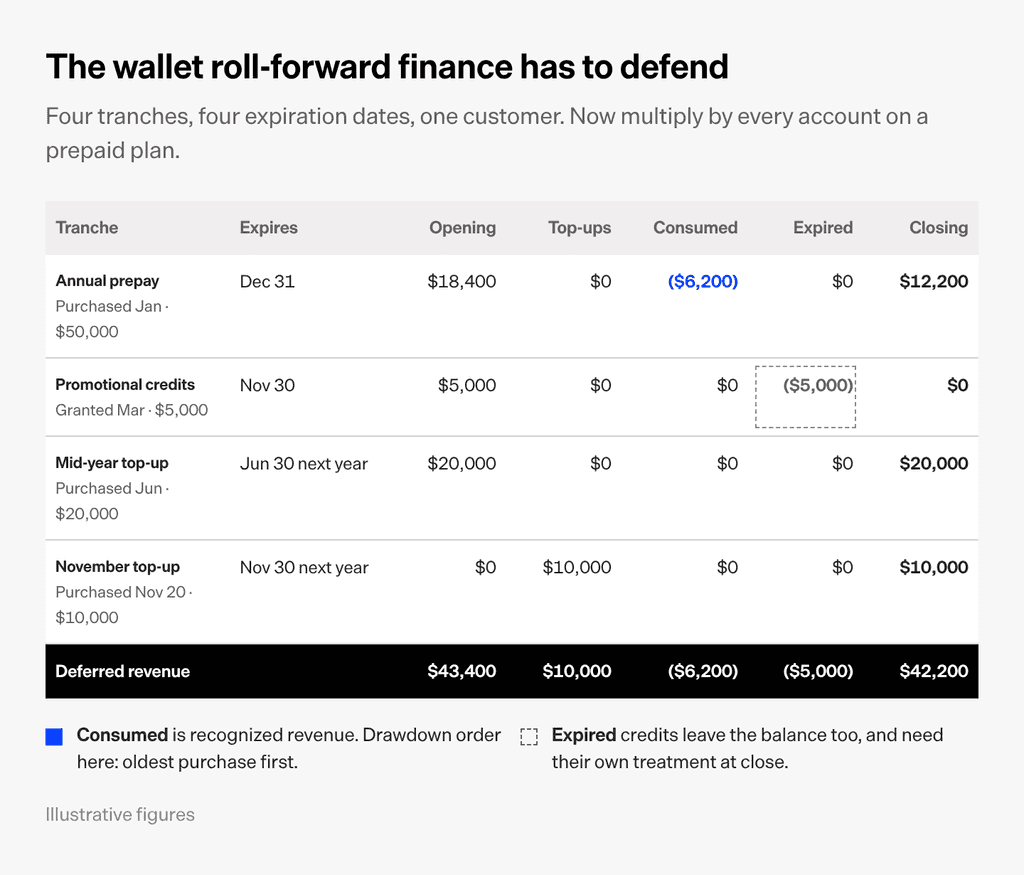
- Ask engineering and product: How is the drawdown logic structured, and can we trace every dollar back to consumption when it’s time to defend the numbers at close?
How do you get the conversation started?
When pricing changes, what happens downstream and who’s responsible for the fix?
It’s a question that needs to be asked, but it’s also somewhat rhetorical. As a finance leader, you need to know about pricing decisions before they happen, or who knows what will happen.
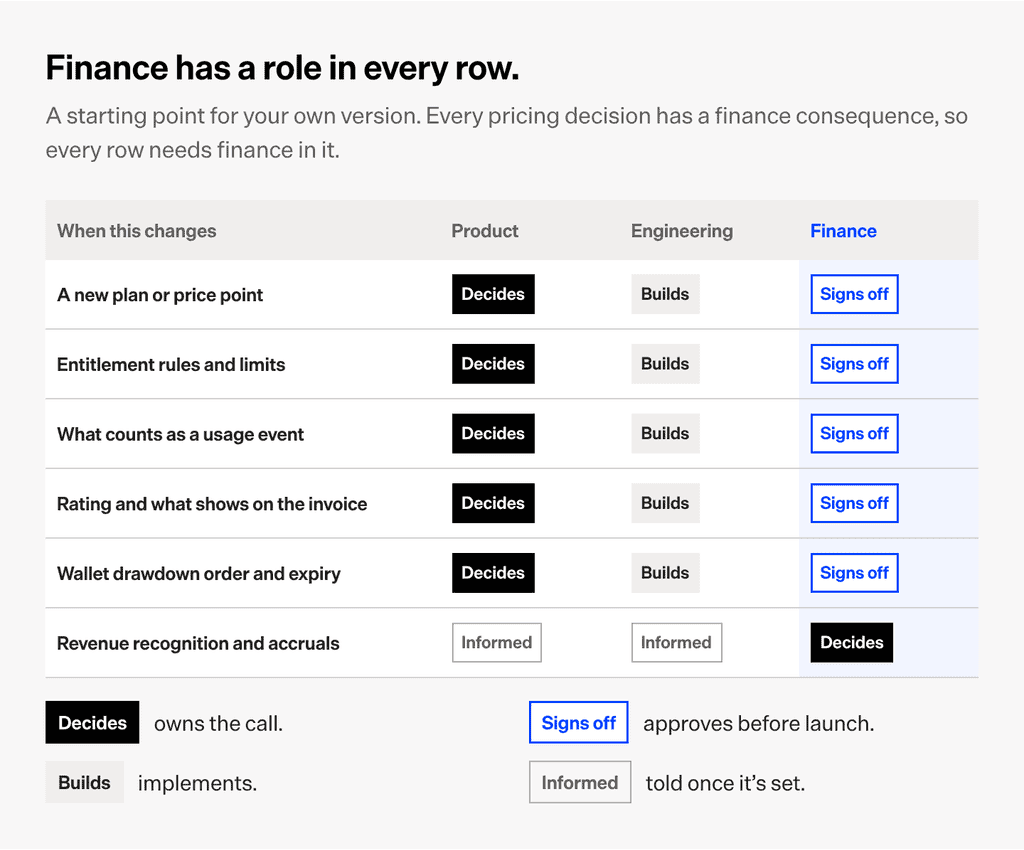
The point of all this is that you must be at the table when pricing is discussed. You are a stakeholder in every pricing project and billing decision.
With a connected finance stack, you have a clear view of how pricing actually performs: what customers buy, how they use the product, where revenue expands or churns, and how it all affects margins. That’s data the product team needs. And when you share it early, you help them make pricing decisions based on real performance, not assumptions.
You don’t need to be engineers; you don’t have to sit on the product team. You just need to collaborate and communicate, so you can ask the right questions, offer the right data, and help product get pricing right before changes become problems at close.
What does “built for this” look like?
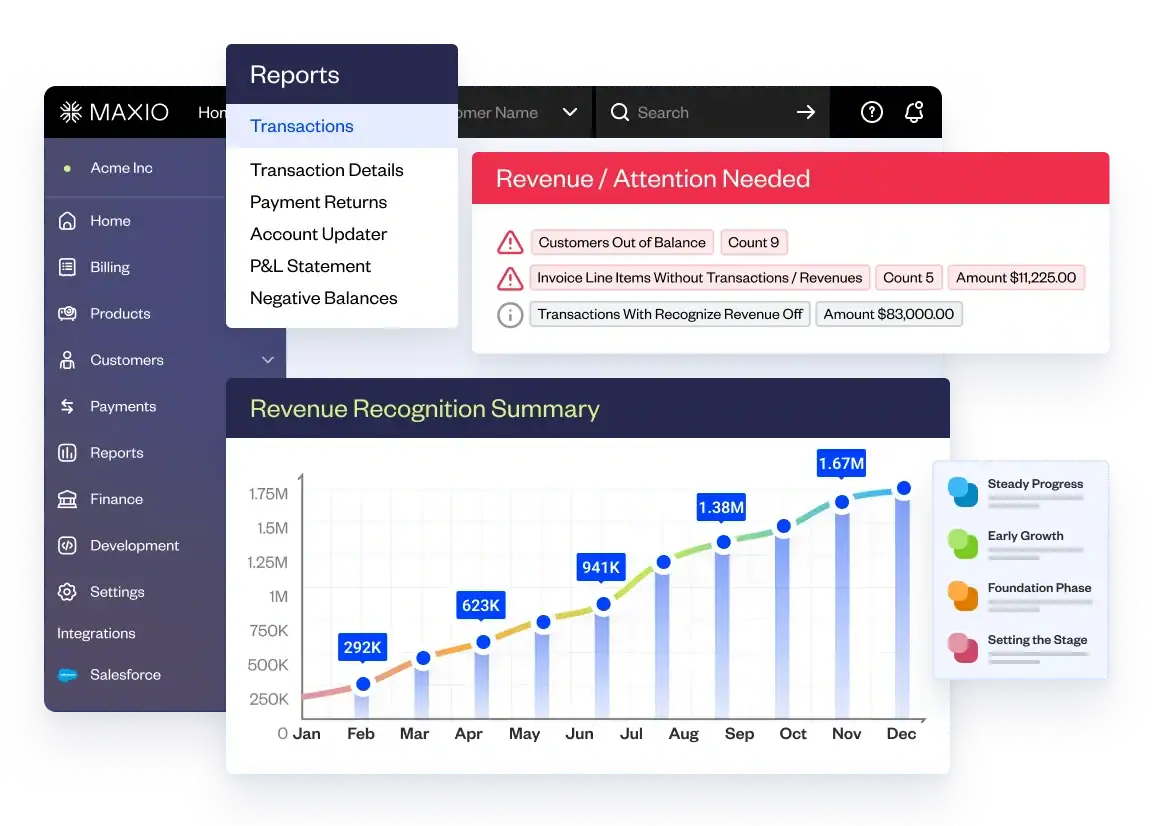
If your pricing structure is built on moving parts and things are moving quickly, you need an AI-native financial infrastructure that moves with them. That means usage accruals, wallet tracking, and entitlement-aware billing built into the platform from the start, not bolted on after the fact.
This is precisely what Maxio is for.
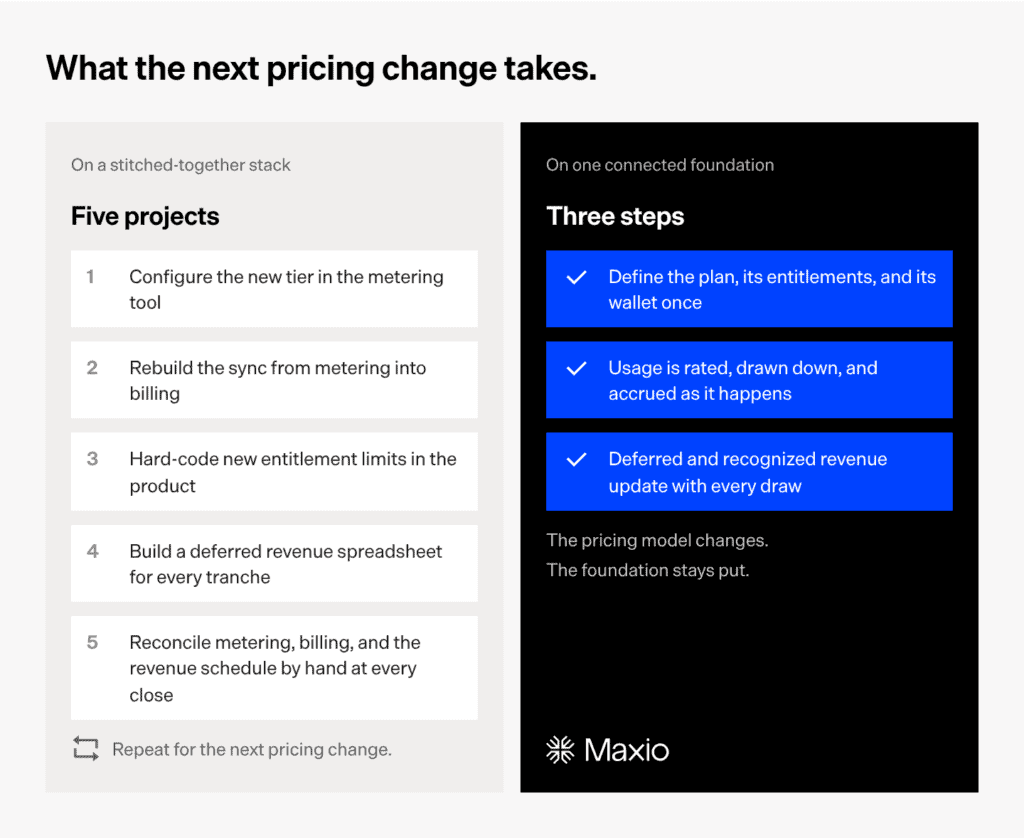
Maxio is a system where entitlements, metering, and wallets aren’t three separate integrations you have to reconcile; it’s all part of one connected foundation. So when the pricing model changes—and it will—the infrastructure underneath it doesn’t have to be rebuilt to keep up.
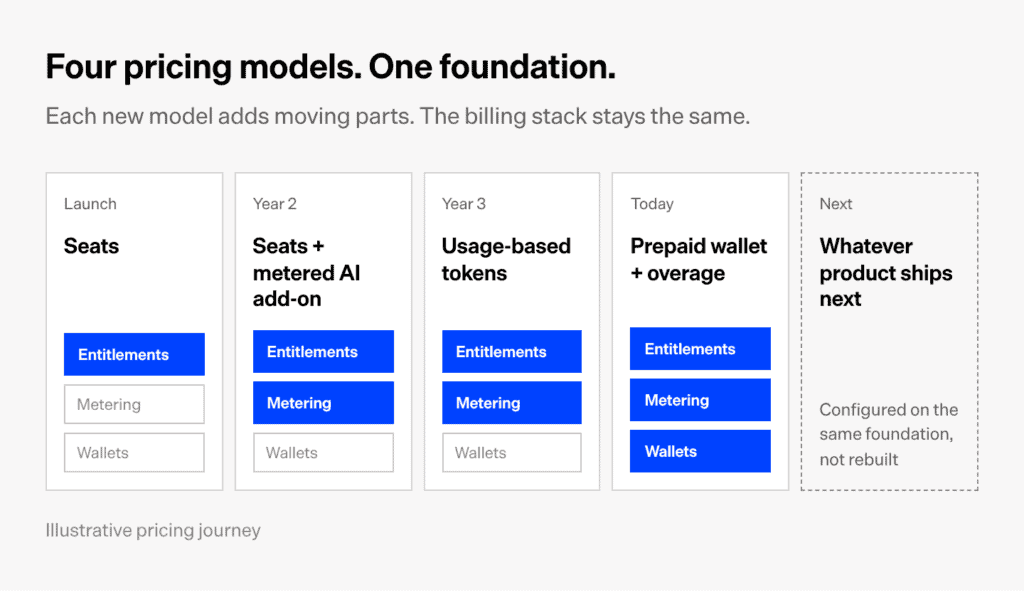
The companies winning the monetization race have figured out that clever pricing models get you in the game. Cross-functional alignment and the infrastructure to support it are what keep you there.
Maxio, the billing platform built with both product and finance in mind, makes it possible. So you can own the billing structure from the start.