AI-Native Has No Founding Date




There’s a belief that only startups built on AI from day one will win the next decade of software. Skip the legacy, start from zero, and outrun the incumbents.
I disagree. AI-native has no founding date. It’s a mindset and a way of operating. Any company can embrace this and win.
Maxio is an AI-native company
For us, that means AI sits at the core of how every function operates.
We released MCP in July 2025, making Maxio the first company in our space to let customers connect their billing and revenue data directly to the AI tools they already use. Around the same time, we were already building with AI inside our own walls.
I learned some lessons the expensive way. One weekend coding session cost me $1,000 in tokens, and I found out while I was out to dinner. That weekend taught me more about the real cost of AI than any briefing could.
Being AI-native also means that anyone here who sees a problem can go build the fix.
Jared Mackey, our VP of Account Management, spent a decade running teams without writing a line of code. Over one weekend, he built a full internal app so account managers get the data they need without filing a request. Our CFO Jon Cochrane gave his team two hours at an offsite to build something for their own work, and every one of them came back with something they now use.
The building spread to the teams closest to our customers, too. People across Maxio who aren’t engineers, including product managers and support, shipped more than 1,000 production changes. Support now resolves product issues that used to sit in an engineering backlog. Every change goes through the same code review, QA, and deployment process as any other. The difference is how many and how quickly they get to that stage.
None of these people were hired to build software. They just knew a problem firsthand, and AI closed the distance between knowing it and fixing it. That’s the shift. The person closest to the problem gets to solve it instead of handing it off.
Announcing Maxio AI
Changing how we work was the first half of this. The second is bringing it to the product our customers run on.
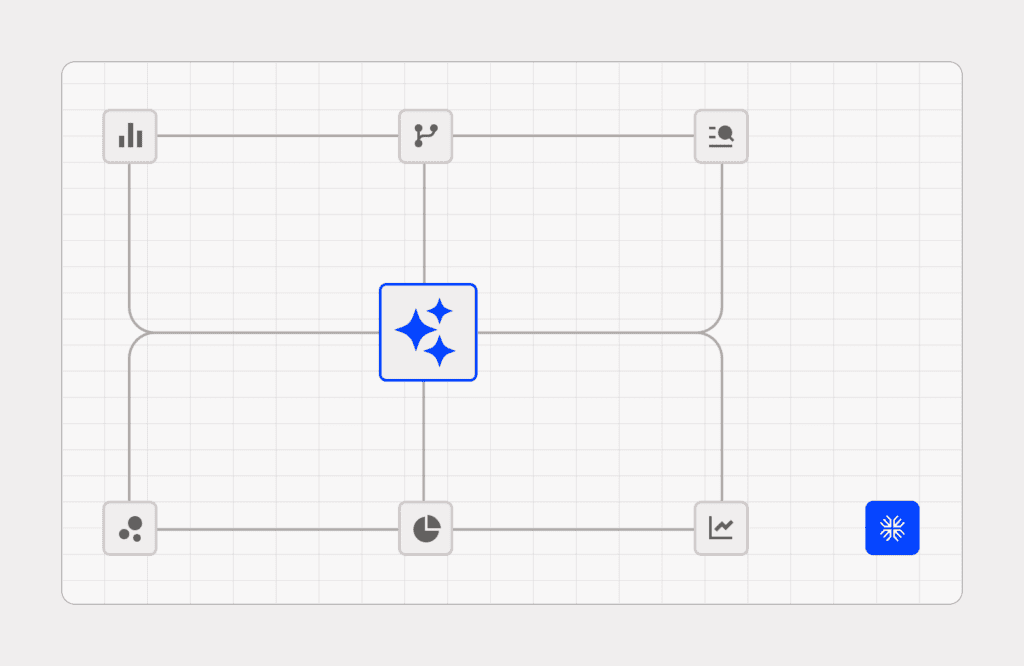
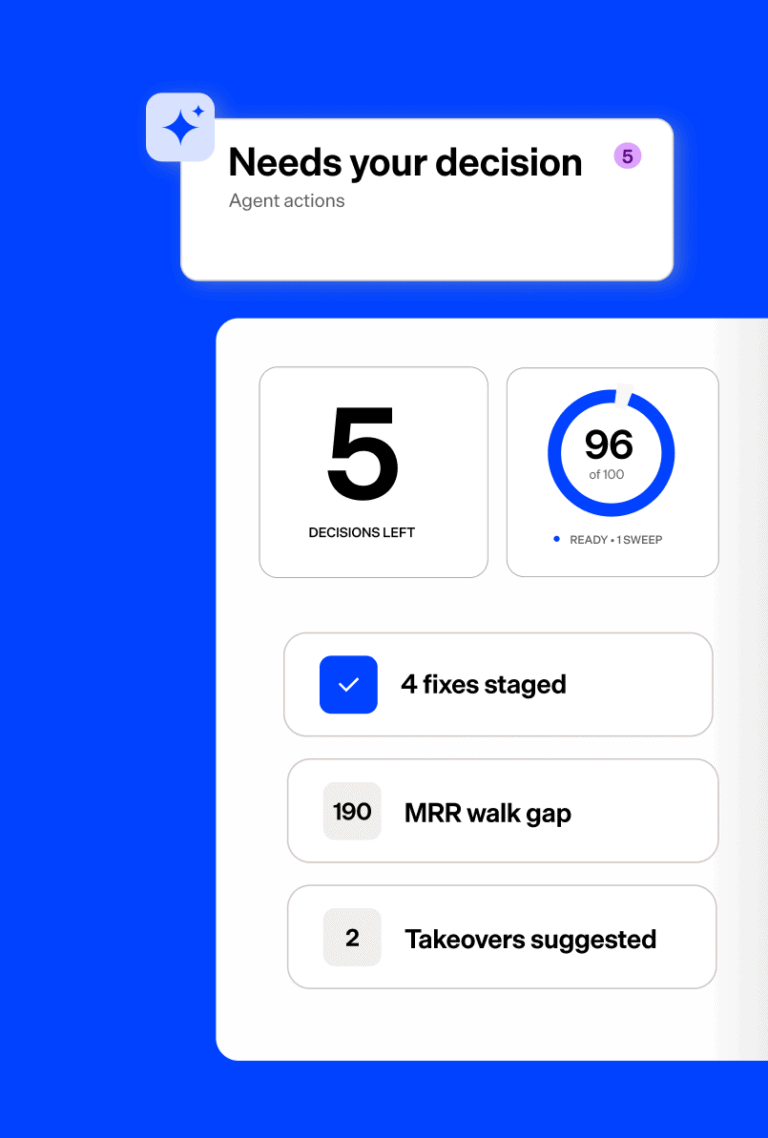
Maxio AI is our vision for agentic work in finance. It moves Maxio from a system of record to a system of execution, with seven agents that find the work, prepare it, and bring it to a person to approve.
We know where this work breaks. Fifteen years of billing edge cases, revenue recognition questions, and collections calls and working with finance and accounting teams taught us which details matter and which ones quietly wreck a close. That shaped how these agents work.
An agent proposes and a person approves, so nothing is written to your books without someone signing off. Every figure comes from the reports already in Maxio and links back to its source, because the agents read numbers rather than generate them. Every check, proposal, and approval is logged with who took it and why. And your agents are yours alone, working only on your data.
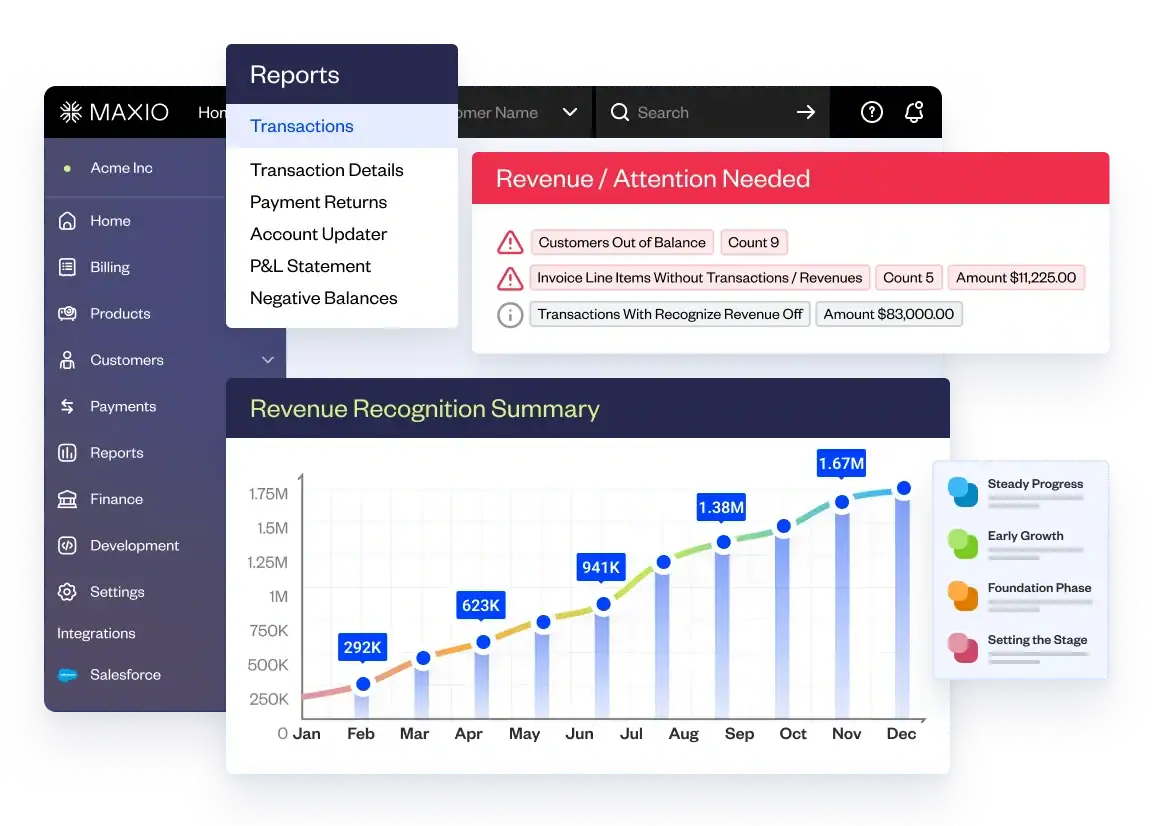
An agent is only as reliable as the system underneath it. Ours run on the same infrastructure that already handles quoting, billing, payments, entitlements, and revenue recognition, on the contracts, invoices, payments, usage, and revenue our customers already keep in Maxio.
Seven agents, each with one job
- Close tells finance leaders each day whether the books could close today, what is blocking them, and what to fix first.
- Collections decides which accounts need a nudge today, drafts customized emails for approval, and leaves reliable payers alone.
- Financial Analyst explains what moved ARR, retention, and revenue, ties ARR to billings to revenue, and flags anomalies, with every figure linked to its source.
- Pricing shows where discounting tracks churn and where realized price drifts from list, with a what-if behind every recommendation.
- Order Processing checks each sales order against the contract and CRM before it reaches billing, and proposes fixes for the ones that don’t match.
- Utilization sets product usage beside ARR and renewal dates to flag renewal risk while there is still time to act.
- Sync finds broken integrations between Maxio and the systems finance runs on, proposes the fix, and re-runs it once a person approves.
Imagine a Monday where the close blockers are already ranked, the collections emails are already drafted, and the broken sync has a fix waiting for your approval. That’s the day these agents are built for. Nothing moves without you, and nothing waits on you to get started either.
Join the waitlist
Early adopters can join the waitlist today. Access starts as early as November, with general availability for all eligible customers by year end.
Whenever your company started, the advantage is the same: your data, your customers, and what you’ve learned running the business. Your founding date is fixed. How you operate isn’t.