AI Product Pricing and Monetization in SaaS: What CFOs Must Model Before Usage Scales



How AI Usage Growth Erodes SaaS Gross Margins
A SaaS company rolls out an AI feature. Adoption takes off, and usage climbs 350% in six months. The product team celebrates. The CFO opens a spreadsheet and starts doing math nobody else has done yet.
Each AI interaction carries a real cost: inference compute, model licensing, sometimes a third-party API call per query. When those costs scale with usage and your pricing stays flat, every new power user widens the gap between what you charge and what it costs to serve them.
Finance leaders at growth-stage SaaS companies need to work through the margin math now, before usage scales further and the damage becomes structural. Pricing an AI product is a financial risk decision, and it belongs on the CFO’s desk as much as the product team’s.
Why Per-Seat and Flat-Rate Pricing Break for AI Products
Flat-rate and per-seat pricing were designed for a world where serving one more user cost almost nothing. Software scales, servers get cheaper, and gross margins stay high. That math held for a long time.
When a customer runs 10,000 AI queries in a month instead of 1,000, your cost of goods sold moves with it, sometimes materially. A per-seat model that looks healthy at average usage could give up 10 to 15 points of gross margin on its heaviest users, depending on model costs and query complexity.
Finance leaders who have already been through an AI rollout tend to treat monetization as a margin and customer-risk problem first and a packaging question second. Letting product teams set AI pricing without a cost-per-interaction model means flying without instruments.
3 Margin Risks to Model Before You Price an AI Feature
Before any AI feature reaches general availability with a price attached, finance should stress-test three scenarios.
Margin floor erosion at the usage tail. Model what happens to gross margin if your top 10% of users consume 5x the AI interactions you assumed. If that scenario drops you below your margin target or investor commitment, fix the price before you go hunting for savings in the cost structure. A pattern we keep seeing among mid-market SaaS finance teams is contracts reopened mid-term because the AI usage assumptions built into the original deal economics were off by an order of magnitude.
Revenue leakage from flat-rate packaging. Heavy AI users on flat-rate plans are running on your subsidy. Quantify it by running the math from the opening scenario. A $500/month plan that costs you $180/month in AI inference for a heavy user runs at a 64% gross margin, well below the 80%+ your model assumed. The gap compounds as adoption grows.
Customer churn risk from overage shock. Usage-based pricing protects margin and introduces a customer experience risk. Customers surprised by an overage bill are more likely to churn, so finance needs to weigh the churn cost of aggressive overage pricing against the margin it protects. Prepaid credits often settle the tradeoff. A customer who buys a credit pack knows the spend up front, gets alerts before the balance runs low, and has a defined outcome at zero: hard stop, overage, or auto top-up. Finance gets cash in hand, a predictable draw-down, and fewer disputed invoices.
The Billing Infrastructure AI Monetization Requires
A pricing model on paper still has to run through your billing system every month. Usage-based AI pricing depends on five capabilities most legacy billing systems lack:
- Event-level metering that captures each AI interaction as a billable event, rather than rolling it into a session or a seat.
- Entitlements that record what each customer can access under their plan, so your product can enforce limits and finance can track consumption against them.
- Prepaid balances that track credits and tokens as they are spent, with rollover and expiry rules set per credit type.
- Flexible rating logic that applies different per-unit rates by tier, product line, or customer segment without an engineering ticket for every change.
- Automated invoicing that blends subscription base fees, consumption, and overage into a bill the customer can follow.
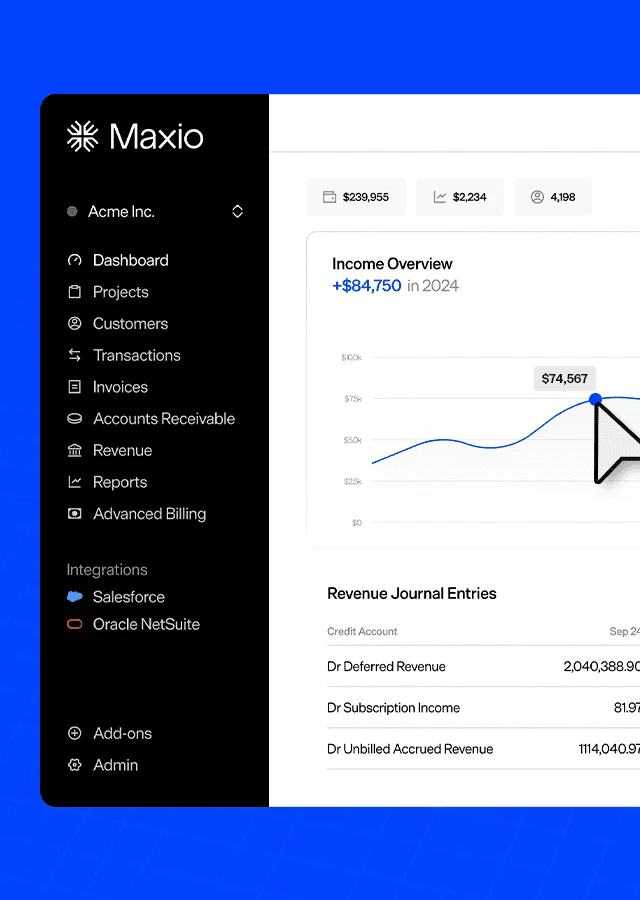
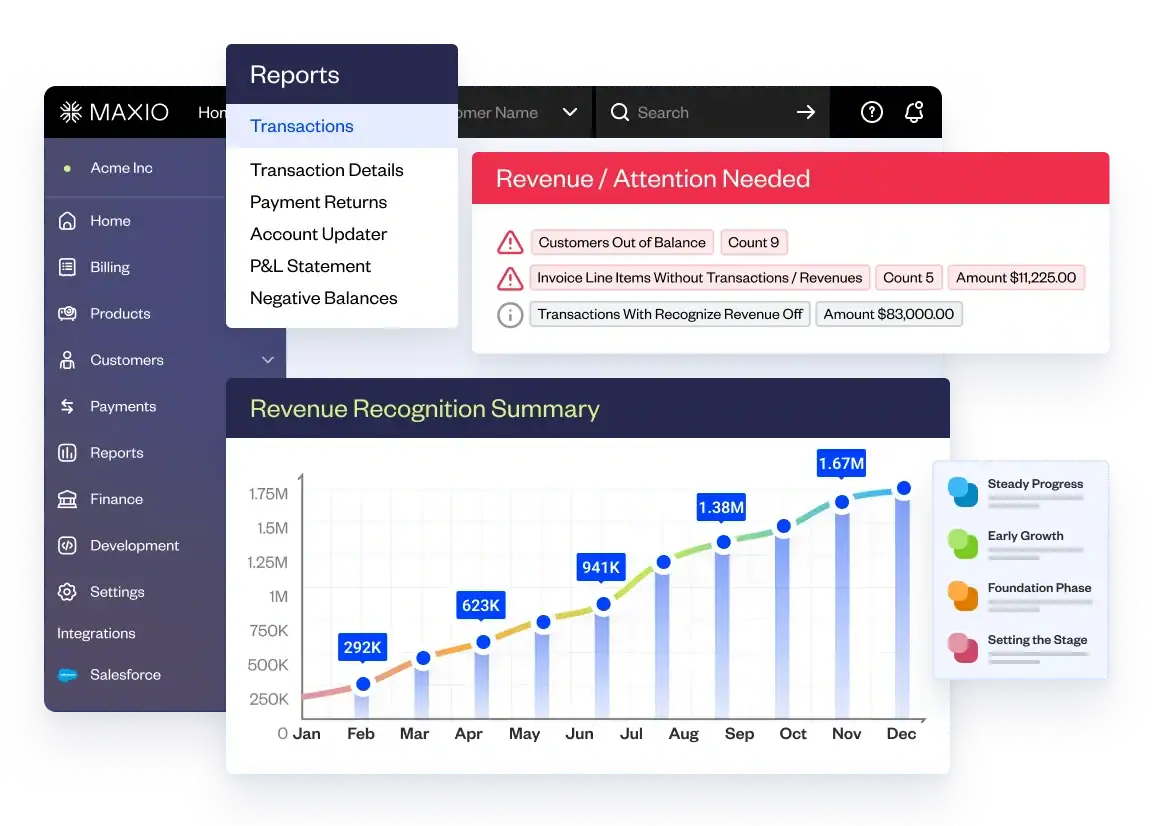
If changing a price or adding a usage metric requires a developer, you won’t be able to iterate on AI pricing as fast as your costs and competitors move. Maxio’s Metering, Entitlements, and Wallets work as one connected system: price the usage, govern the access, and track prepaid value as it is spent. Finance teams can adjust rating logic and tier thresholds without engineering involvement.
How Do You Price an AI Product Without Usage Data?
Most CFOs face a chicken-and-egg problem. You need usage data to set defensible AI pricing, and you need to ship the feature to get usage data.
Launch with metered pricing, billed directly or drawn down from prepaid credits, and set the rate to cover your P90 cost scenario rather than your average. Build in a contractual right to reprice after 90 days based on observed usage. Tell customers about it up front, and tie the review to the usage data they can see on their own invoices.
Meanwhile, instrument everything. Every AI interaction should generate a billing event, even before you charge for it. That event log becomes your pricing dataset. After 90 days you will have real distribution data: median usage, the heavy-user tail, usage by customer segment, and cost per interaction by feature. Our 2025 SaaS Pricing Trends Report found that companies using consumption-based models iterate on pricing 2–3x more often than those on flat-rate structures.
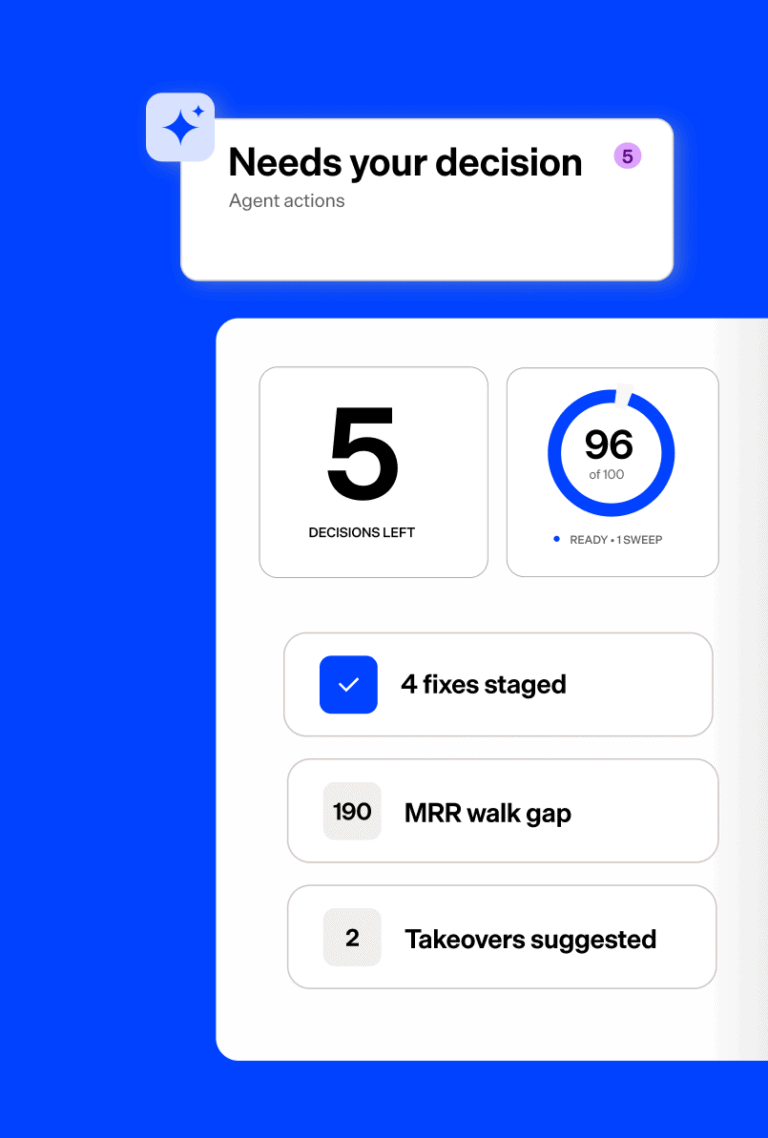
Iterating that often means keeping a close eye on usage data, which takes time most finance teams don’t have. Maxio AI works from the billing reports already in your account, and one of its agents compares product usage against ARR and renewal dates to flag accounts where the two are out of line. It surfaces the flat-rate subsidy described above, account by account, ahead of renewal. The agents propose actions, and your team approves them.
Who Owns AI Pricing? What Finance Needs from Product and Engineering
AI pricing breaks down when finance, product, and engineering work from different models. Finance needs three things from the other teams:
- Cost attribution at the feature level. Per-feature, per-interaction cost that maps to specific SKUs. Aggregate AI infrastructure cost lets you price the bundle and nothing more.
- Usage event schemas defined before launch. Inconsistent instrumentation produces unreliable billing data. Finance belongs in the room when event schemas are designed.
- A shared definition of a billable interaction. Is a failed query billable? A cached response? A multi-step agent workflow? Each answer carries revenue implications and needs finance sign-off before it becomes a default.
The CFO who waits for a finished pricing proposal inherits the margin problem. Get upstream.
AI Pricing Checklist for CFOs
Before your next AI feature gets a price, get these six on paper:
- Your cost per interaction, by feature, at your P90 cost scenario.
- Your gross margin if the top 10% of users consume 5x your assumption.
- The subsidy you carry for heavy users on flat-rate plans.
- Your zero-balance policy for prepaid credits, if you sell them: hard stop, overage, or auto top-up.
- A contractual right to reprice after 90 days of observed usage.
- A finance-approved definition of a billable interaction, built into the usage event schema before launch.
If producing these takes a data request and a week of spreadsheets, start with the billing layer. Most of this list traces back to usage events and credit balances, and when those live in the same system that invoices customers, the margin math is ready before the feature ships.
See how Maxio Metering and Wallets put event-level usage and prepaid balances in one place, so your pricing model and your invoices start from the same numbers.