AI Agents in SaaS Revenue Management: What They Handle and What Your Team Still Decides




How AI Agents Fit Into SaaS Revenue Operations
A signed order form shows an 18% discount. The CRM says 15%. Left alone, that gap becomes an incorrect invoice, a disputed payment, and a revenue schedule someone has to unwind at quarter end. An AI agent can catch it before the order is released, lay out both sources side by side, and wait for someone on your team to decide which number is right.
Much of the work between a signed contract and recognized revenue is checking, matching, and chasing, and agents can take it on today. The decisions that carry financial, legal, or customer risk still belong with people.
For RevOps and finance teams, a good first question is what kind of work an agent is doing, because the answer tells you how much control it needs.
How to Evaluate AI Agents: Read Access vs. Write Access
One practical way to evaluate agents is to sort the work by what the agent is allowed to touch.
Agents that read analyze your data and explain it. They can’t change records, so the risk is low, and the payoff is time, with analysis that used to take an afternoon arriving as a draft you can check.
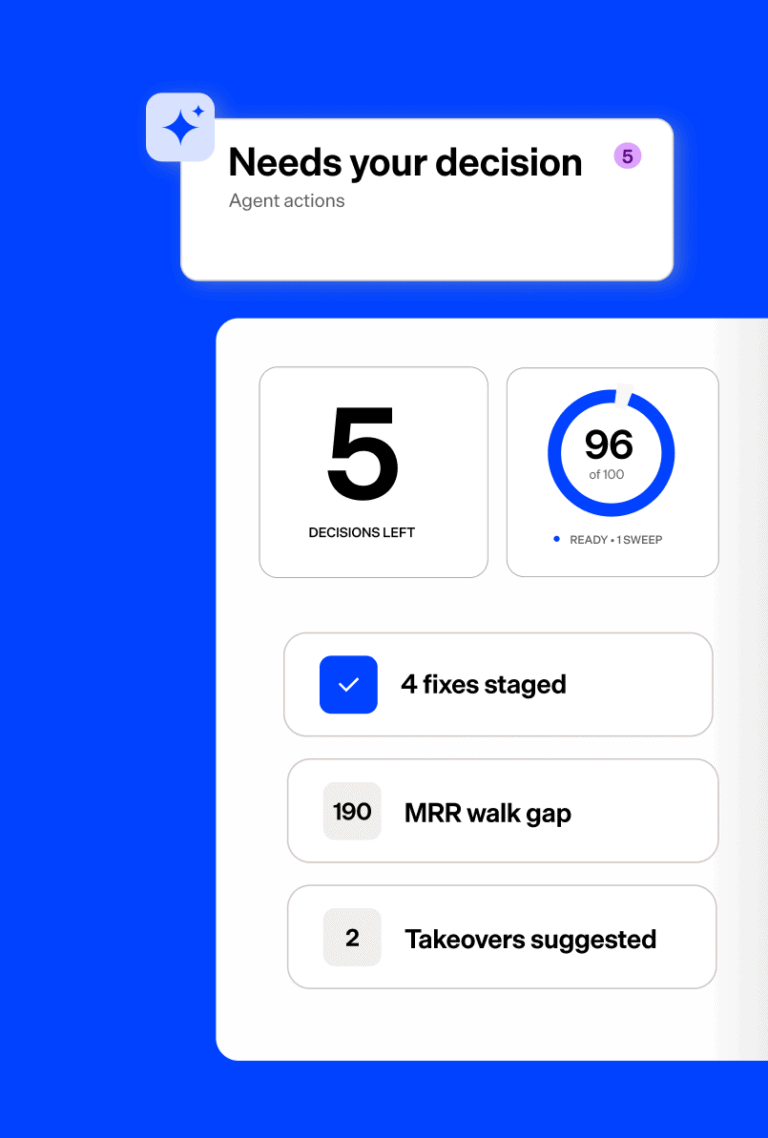
Agents that act change records in your systems, so they need tighter controls: approval before any change, scoped access, and a record of what happened.
When you evaluate any AI capability in your billing or RevOps stack, it helps to know which group it belongs to. For agents that act, three follow-up questions matter most:
- Through what path does it write?
- Who approves the change?
- What gets logged?
What AI Agents Can Automate in Quote-to-Cash
The clearest wins sit in work where the logic already lives in your contracts, billing configuration, and reports.
Agents that read
Revenue reporting. An agent can build the ARR bridge, explain changes in your KPIs, and trace anomalies to the accounts behind them. When churn ticks up two points, the explanation arrives with the accounts that caused it, so board prep starts from an answer with its sources attached.
Discount governance. An agent can compare discount depth against churn and show how tiers and bundles actually perform. If deals closed at deep discounts churn at higher rates, RevOps sees it in time to tighten approval rules before the next quarter’s deals.
Renewal risk and expansion. An agent can compare product usage against ARR and renewal dates. An account whose usage dropped by a third with a renewal six weeks out gets flagged while there is still time for a conversation, and accounts outgrowing their plan surface as expansion opportunities.
Agents that act
Order processing. An agent can read the uploaded order form, build the order, and check discount, term, and quantity against the contract and the CRM before release. The mismatch from the opening gets caught at the order, where it takes minutes to fix, and never turns into a disputed invoice.
Integration failures. When the export from billing to the ERP fails because a GL account was never mapped, invoices stop posting and the close gets harder. An agent can read the run logs, find the unmapped account, propose the mapping, and re-run the sync once someone approves. A failure that could sit unnoticed for days gets fixed the same morning.
Collections. An agent can rank overdue accounts by amount and risk, draft outreach for approval, track the payment dates customers have committed to, and leave alone the accounts that reliably pay on time. Your team’s time goes to the handful of accounts that need a conversation.
None of this asks the agent to make new judgment calls. Each task works from records and rules your team has already defined, which is what makes it reasonable to hand off.
Where Human Judgment Still Matters in Revenue Operations
Some revenue work carries judgment an agent shouldn’t make on its own.
Non-standard contract terms. A bespoke discount structure, a custom SLA credit, or a multi-year ramp that doesn’t fit your price book needs someone to decide how to model it. An agent can flag the record and pull the relevant terms. A deal desk analyst or controller makes the call.
Complex revenue recognition. Variable consideration, significant financing components, and multiple performance obligations with estimated standalone selling prices all require accounting judgment. An agent can surface the data. A CPA signs off.
Customer relationship decisions. Waiving a late fee for a strategic account or offering a payment plan to a customer who is 90 days past due but expanding depends on relationship history and pipeline context. Those calls stay with the people who own the relationship.
Audit defense. When auditors ask why an entry landed in Q3 instead of Q4, they need a person who can explain the judgment behind it, backed by a record of who approved what.
AI Agent Controls: A Governance Checklist for Finance
Before you connect any agent to your billing, CRM, or ERP, look for these controls:
- Approval before every write. The agent proposes, and a person confirms.
- Scoped access per agent. Each agent gets its own credential that you can revoke without touching the others.
- Named workflows only. Agents make changes through defined actions, with no open access to the database.
- Figures traceable to your system of record. Every number the agent reports links back to a source record.
- Confidence scores. Every output shows how sure the agent is, so your team knows where to look harder.
- An audit trail that reconstructs the decision. The log should capture the action, the agent, the data it read, its confidence, and who approved or modified it.
These controls are what give an approval real weight. Without them, signing off on a proposal means trusting a result you can’t verify.
Data Requirements for AI Agents in Billing
An agent is only as reliable as the records it reads. In revenue operations, that means quotes, orders, contracts, subscriptions, usage, invoices, payments, amendments, and revenue schedules. Clean contract data, a well-configured price book, and a billing system that enforces rules consistently make agent proposals worth approving. When those foundations are shaky, an agent surfaces the problems faster, and your team still has to fix them.
Before you expand what agents handle, check the basics:
- Do your billing records match your contracts?
- Does your usage data sync reliably?
- Can you follow a recognized revenue figure back to its source?
How to Get Started with AI Agents in RevOps
A natural place to start is with read-only agents and action work that is high in volume and low in judgment, such as order checks, collections outreach, and sync fixes. Those areas let your team see how agents perform before they touch anything sensitive. One useful signal along the way is how often a proposal gets approved without changes. A high approval rate suggests an agent is ready for a wider set of tasks, and a low one usually points to data or rules worth cleaning up first.
Over time, your team’s attention can shift from processing transactions to reviewing exceptions and from building reports to interpreting them.
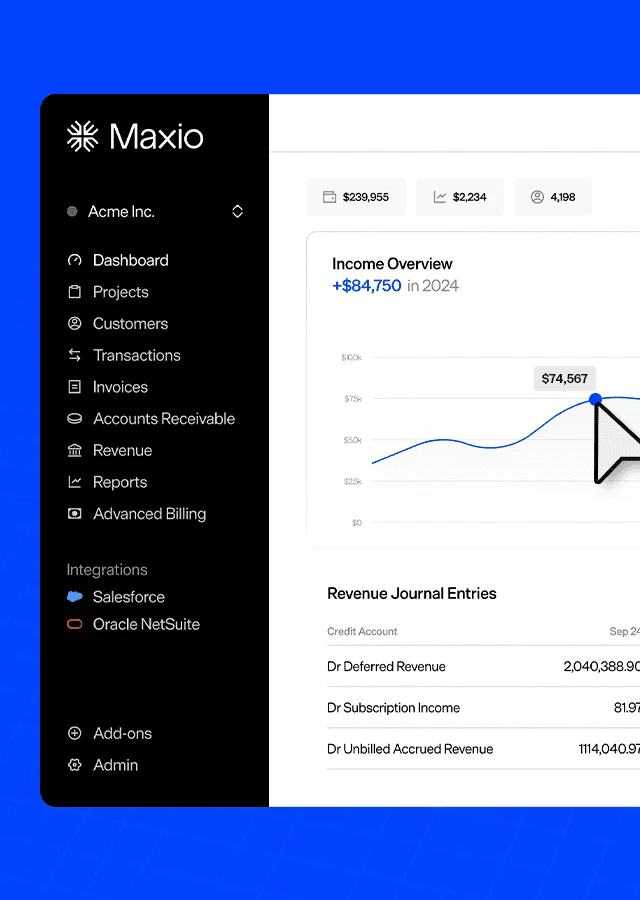
Maxio AI puts these ideas to work inside the billing platform where your revenue data already lives. Its agents read the same quotes, orders, contracts, and invoices your team works from, explain what changed, and prepare fixes that wait for your team’s approval. To see what that shift could look like on your own billing data, join the waitlist.